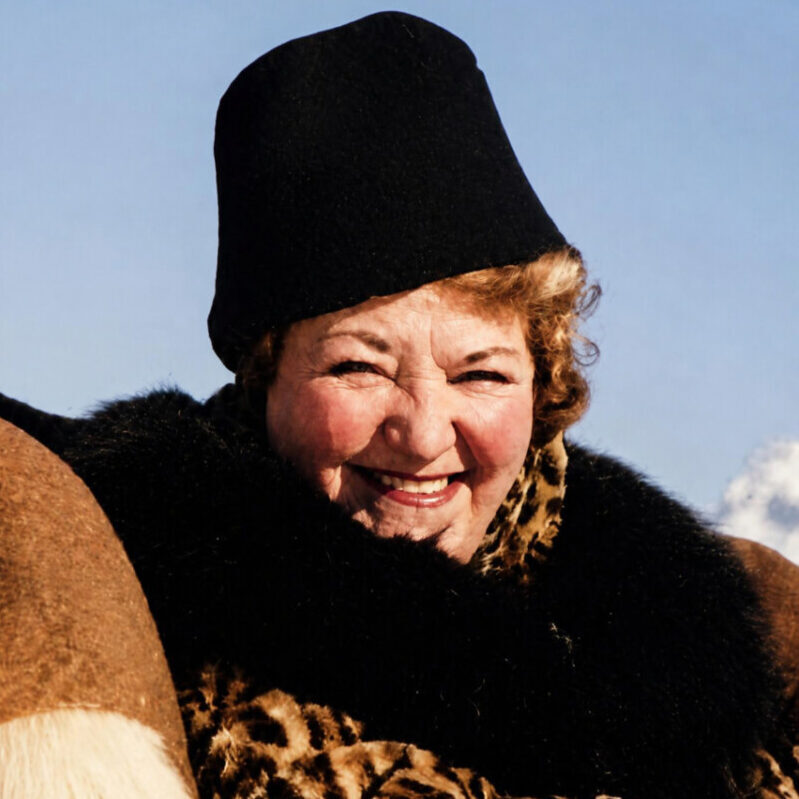
There was only one reason why Judy Shirley was invited to Hull’s VE Day celebrations, and that’s because she was Mira’s friend.
From 1933 Mira’s stage school the West End Studio, trained many girls and boys in theatre, dance and elocution and Judy was one of her protegees. Born in 1907, Judy – otherwise named Florence – was not far off Mira’s age and came from a showbiz family that included Ann, Rosa and Shirley Lenner, who sung in dance bands, as did their sis.
Like Mira, Judy was to be found on BBC Radio regularly during the Thirties, first appearing in 1936 with Louis Levy and his Symphony Orchestra accompanying her singing ‘Music from the Movies,’ a set of songs including Music Hath Charms, Everything’s In Rhythm with my Heart and the smash hit Top Hat sung by Fred Astaire in the film giving the song its name.
Her stint on BBC Radio involved singing the crooning, sentimental love songs that pervaded the Thirties. Late at night before the station shut down, people would listen tapping their feet or clasping their husbands doing the two-step and waltz round their living rooms.
Judy’s voice was high and swooping with the tremulous notes and scales of popular songs written for the female voice. Mira would have taught her not only how to articulate words properly, which marked out her sung performances, but also how to put expression and meaning behind the phrases and rhythms to make them attractive to the audience.
‘It’s Monday night at Seven’ starts off this clip of Judy ‘the singing commere’ who sung introductions rather than spoke them as a chat show hostess. She also teamed up with male vocalists and appeared on published music scores as a means of advertising as well as catching the eye of people who might have heard her sing them.
One was made famous by Marlene Deitrich – ‘Lily Marlene.’ Written as a German love poem in 1915, it became very popular during World War II on both sides of the Channel.
Sung by numerous female artistes including Vera Lynn, the first time British audiences would have heard it in their mother tongue was after it was translated into English in early 1942. Such was its popularity that the songwriter Tommie Connor re-wrote the lyrics, changing it into ‘Lily of the Lamplight’ in 1944.
Pictured on the front of the cover of the sheet music is a portrait of the singer in what looks like a uniform with a white blouse and collar ‘ featured and broadcast by Judy Shirley.’
Those of you who read music can try out the song or why not learn it from Vera Lynn and sing it by ear. On YouTube you can also hear Marlene Deirtrich’s version, it was part of her repertoire whenever she sang live.
One of her more famous successes, Judy Shirley died in 1996, the same year as Mira Johnson her mentor and friend.
© Carrie Henderson. 2023.