
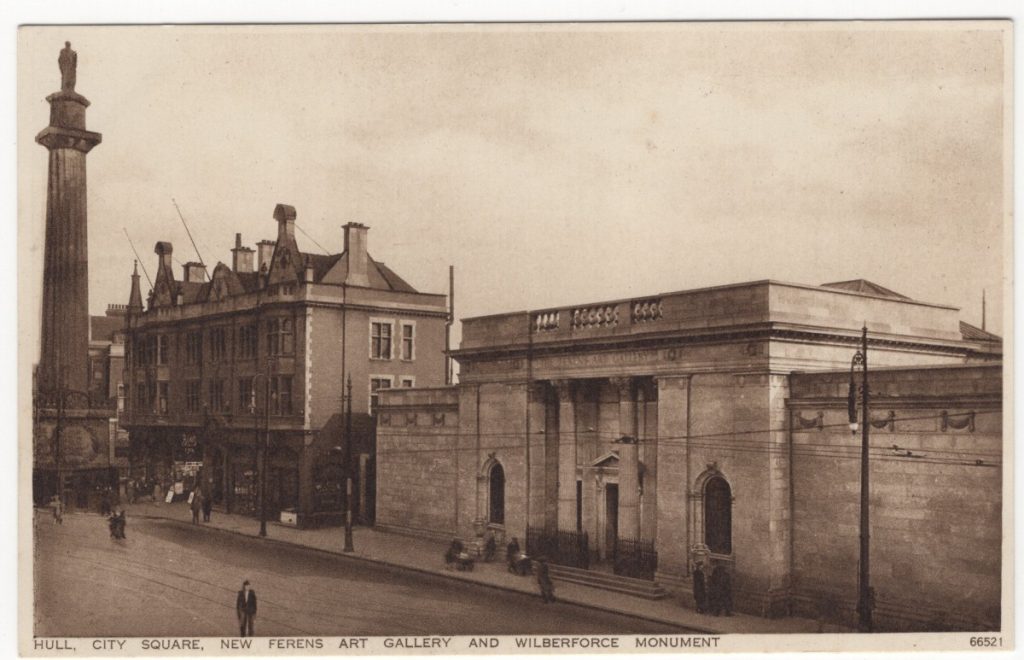
When the Bibberews arrived in Hull a statue to William Wilberforce rose like Nelson’s Column above Monument Bridge near City Square.
Wilberforce was a member of Parliament and fervant anti-slavery campaigner, his campaign resulted in the Slavery Abolition Act of 1933 and after his death the city of Hull agreed to erect a statue in his honour.
The city did its utmost to raise funds and it was done very quickly, the city responding to need as it did always.
The cornerstone was laid on 1st August 1834, finished by 1835, 5 years before the Biberew’s arrived. One of Hull’s most identifiable landmarks in the days before cars were invented, walkers and cyclists flooded around the statue going into and out of the Old Town area of Hull.
Thomas Ferens, a local businessman became interested in growing the city’s collection of artworks and paintings. Donating moneys to the Council so that they could expand, they continued to do so through the years he became an MP for the City and Justice of the Peace.
Initially housing the artistic collection in the Royal Institution on Albion Street, it moved to the top floor of City Hall. Ferens, however thought that the artwork needed a dedicated space.
Knocking down St. John the Evangelist Church due to its lack of use, where it once stood by Princes Dock became the location of the new gallery named after the man who donated moneys for it to be built.
By the early Twenties the landscape was changing, more and more motor cars appeared. In 1927 when the Ferens Gallery was opened, traffic circulated in a precarious mass of vehicles, trams and pedestrians around what was once a rough, open thoroughfare.
The Council acted by moving the Monument to Queen’s Gardens, headed up by Tarran’s building firm who built the Regal Ferensway.
The Gardens had only recently been opened, diggers and navvies throwing earth into Queen’s Dock to fill it in and its evenly spaced green areas and flowerbeds seemed the best location for its new resting place.
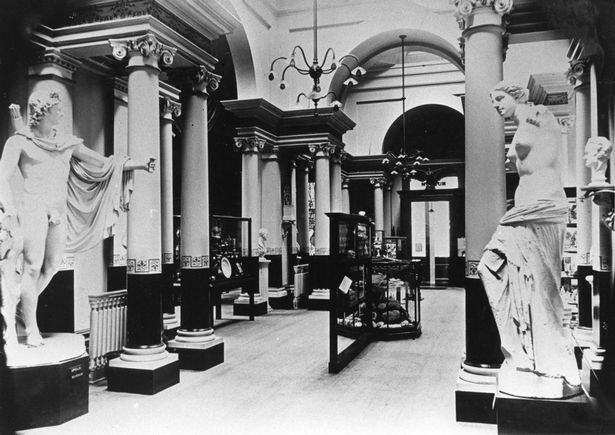
Once moved it became a clearer route for people to walk into the Ferens Gallery, Hull’s newest place dedicated to displaying the arts opened in 1927.
The Royal Institution on Albion Street had long been its first and with its long Doric columns and grey stone facade housed all manner of exhibits, museum pieces and statues but the Ferens dedicated itself to fine art; impressive paintings.
Blackened by years of industry in the area it was its primary museum until storm clouds gathered in Europe and in 1943 it burned down in one of the last raids of the Hull Blitz.
The Monument and Ferens Gallery survived aerial bombing that attacked the rest of the city, a miracle when so many others in the area fell or were burned into ashes.
Modern visitors can browse its rooms looking at some of its famous scenes and look into the faces of the people who made Hull the city it is today.
______
Test your knowledge
The Ferens Gallery is slap bang in the city centre
Do you think the docks influenced where it was placed…