Readers, click the cross top left to remove the preview and use two fingers to enlarge on screen
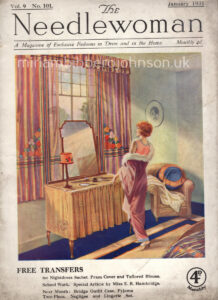
By January 1931 Needlewoman magazine was talking to readers about the newest Parisian trends. Against a backdrop of the holiday season, one of the busiest social times of the year, this magazine indicated a change to the country’s New Year traditions.
‘The custom of paying New Year’s calls is rapidly dying out, partly because nobody wants to stay at home. Everyone puts on her new coat and smartest hat and ventures abroad,’ abroad in the Thirties meant travelling to another British county or far away from home.
It continues with a run-down of the Parisian designers and the season’s trends:
‘Cunning little dresses of all descriptions are hidden under enveloping fur garments. Dressy suits are still fashionable for afternoon with charming tucked and embroidered blouses but suits have by no means crowded out the little on piece frock, which is present in all sorts of material from tulle to tweed.’
In the salons of Maggie Rouff edges use Romanian cross stitch, embroidery by Lelong and Benevegna, Patou creating tunics embroidered with tiny motifs.
At Burlington House in London, a Persian exhibition inspired many to consider its influence, stitching flowers and sprays across satin in shining trails of the Orient, embellishing an already valuable fabric with care to make the most of its sheen.
Children were the focus of much attention. Christening robes to hats and mittens, net curtains and table runners could be made by following the patterns or picking up the pages of tissue-paper inserts to trace their designs.
A bigger issue than previously it was designed to keep women occupied throughout the holiday season.
Want to know more about Mira’s other career? Watch the House of Mirelle for free on YouTube