Forties fashion really started in 1939 with the announcement everyone dreaded – war with Germany was happening again. At the outset, the wealthiest wore what they had in the Thirties; furs lined their wardrobes and they looked to Paris for inspiration, but by late 1940 all would have changed.
War affected fashion as much as it did food and petrol – nothing was saved. All commodities were hijacked by conflict across the world but the textiles and components of fashion were particularly influenced by restrictions in the U.K.

______
First came a change of attitude. From Autumn 1939 it was considered more and more unseemly to dress up in flashy shows of affluence while air raid shelters could be used at a moment’s notice and ‘our boys’ were fighting elsewhere.
Long dresses were the first casualty, then wedding dresses, day dresses and skirt suits evolving more practically and although fashion seasons – Spring, Summer, Autumn, Winter – continued, in June 1940 when Paris fell to the Nazi’s the world was cut adrift from the influence it brought to bear.
Increasingly hemmed in from the outside world, facing Europe and the turmoil in the North Sea, Hull’s docks fell silent of shipping, no longer carrying wares from all over the world into the UK.
Blockades of Europe and naval action stopped textiles and clothes from being imported, but until mid-1941 Britain continued to create as they had previously; the talents of designers from houses like Matita, Dorville, Harella and Susan Small traded as always.
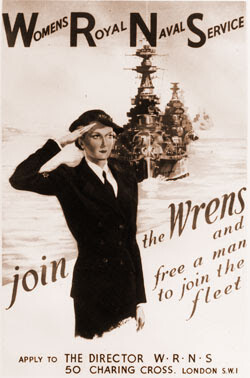
By the beginning of 1941 fashion was secondary to the situation as war dragged on unabated. Women of all ages were called up and the cafés of Hull saw them dressed in Air Force blue, navy for the WReNS or Army greens, nurses in white, Land Girls in mustard-colours and browns, working fields to ensure food was maintained.
Shelves became sparser and soon everyone was patching, darning, Making-Do-and-Mending as well as buying second-hand. Silk stockings ran out and clever solutions had to be found. War made women view life practically, dressing in shorter skirts and even trousers known as slacks – a very new trend. Soap was also rationed and, hidden under snoods and scarves, turbans hid unwashed hair. Everyone was creative and resourceful, a huge leveller across the population.
Fashion seasons extended from months to years, if something was bought it had to last until who-knows-when. But Hull steeled itself when May 1941 saw the most damage, Terror Rained from the Sky annihilating its city centre, but defiant, business rose again.
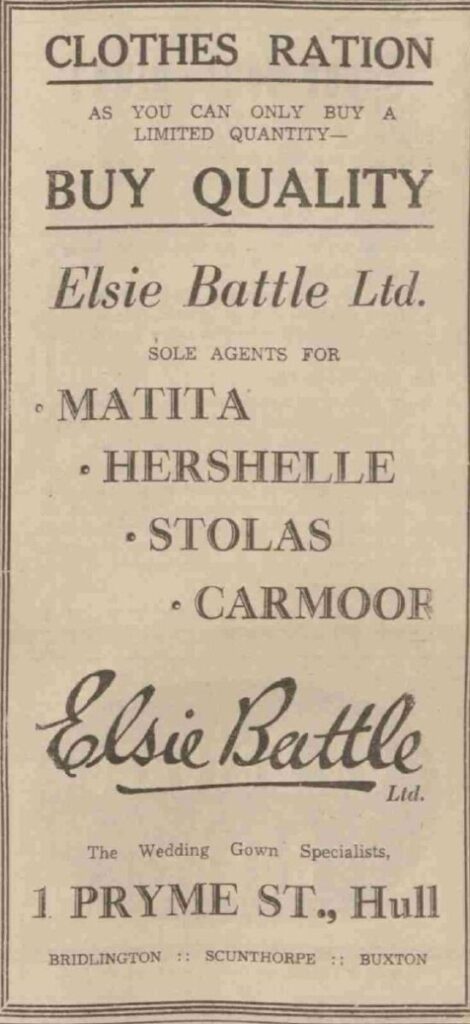
Hard on the heels of the Hull Blitz, June 1941 drew a line in the sand. The Government’s prolific restrictions affected every aspect of clothes-making that had happened up til then.
Clothes Rationing meant that everyone regardless of income had a budget and that budget couldn’t be borrowed against. Shopkeepers clipped coupons as well as taking cash in a direct swap for clothing and it ran alongside ‘the Utility Scheme.’
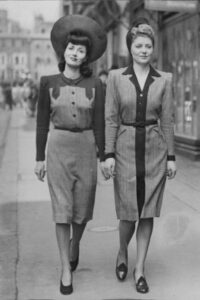
Utility clothing would last far longer than the War years. Recognising that factories were needed for production of tents, munitions and war necessities, clothing becoming more scarce. The government set up incentives with edicts to create standardised clothing. At the same time they changed what everyone could do with fashion design in a raft of rules called ‘the Austerity Regulations.’
A coupon book for the year 1947 to 1948, owned by Ms Caroline Crowe of Brierley Hill in the West Midlands. Some of the yellow coupons have been clipped out, indicating a purchase but she didn’t buy any more clothing the following year as the magenta, khaki and crimson ones remain.
_____
Austerity carved out the wartime look with its broad shoulders, unembellished fabrics, its limit on pockets, buttons, seams and hems. Prices on finished products were capped and Purchase Tax didn’t have to be paid either, making Utility clothing the mainstay of the War.
Hats were off-ration and became increasingly more unusual, displaying artistry and flair. Throwing themselves into designing with every scrap and no limit to imagination, some wartime millinery would be unthinkable to wear in the present-day.
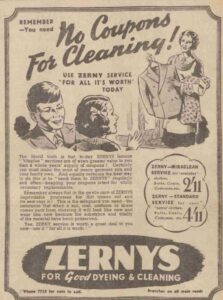
Over 80% of fashion during the War in Britain was Utility and although some luxury was allowed, with 100% purchase tax on any of those items, many women decided to go with what was considered practical and morally correct.
By the time 1945 came round and War ended, the country was hungry for something new in the air.
It came late, taking until February 1947 when a young man called Christian Dior displayed his ‘Corolle Line’ in Paris, Editor-In-Chief of Harper’s Bazaar exclaiming, “Your dresses have such a new look!”
Still experiencing huge shortages and in the midst of rationing, many in Britain were not ready for the full skirts and yards of fabric it meant.
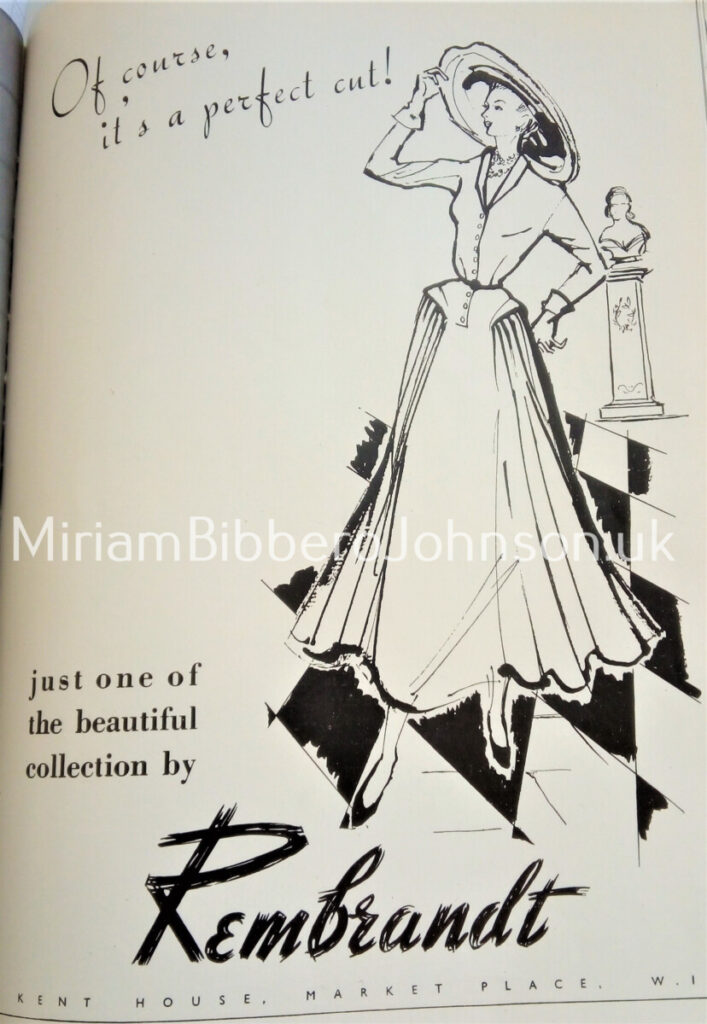
By 1950 opinion changed, the New Look shaped fashion and Paris was king again. In 1949 Clothes Rationing and Austerity Regulations ended, freeing up designers to show their ideas as they wanted and saw fit.
Britain was not out of danger, shortages still apparent but it would be Paris and not Germany that indicated what women would wear in 1950 at the end of the War years.
What’s your favourite look from the 40s? Let us know on our Facebook page
Want to know more about Mira’s other career? Watch the House of Mirelle for free on YouTube
Test Your Knowledge
Woo Hoo! You’ve passed. Some answers weren’t right. Read the article and try again.Results


#1. What year did World War II break out
#2. What clothing brands were popular in the Forties
#3. What uniforms did women wear in Hull during World War II
#4. What affected fashion in World War II
#5. What was Make Do and Mend
#6. When was clothes rationing implimented
#7. What was Utility clothing
#8. When did Utility clothing end
#9. What was the Corolle Line
#10. How did the public react to The New Look