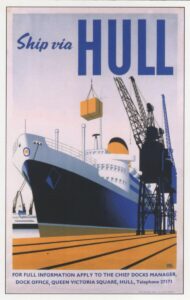
A promotional poster designed by Harry Hudson Rodmell telling enquirers to visit the Dock Offices in Queen Victoria Square.
Hull was Britain’s Third Port until the Cod Wars of the 1970s, its chain of docks receiving wares to and from the rest of the world.
Passenger ships arrived carrying merchants and tourists, family members and new arrivals, some seeing the city for the first time, drawn to Hull from the shipping lines between it and home.
Picture postcards were a way of connecting loved ones and each tells a story, their selection as important as their sentiments and good wishes back home.
Walking or travelling and meeting friends, or colleagues, the city opened up and became familiar, embedded in their memories. Before the early days of photography some scenes could only be painted and the picture they chose captures a scene they’d experienced and wanted to share.
These postcards span over 100 years of history covering the years Mira and her family lived and worked in the city. Starting in around 1900 they show the way the city was represented, its highlights and landmarks sometimes completely different in comparison with today.
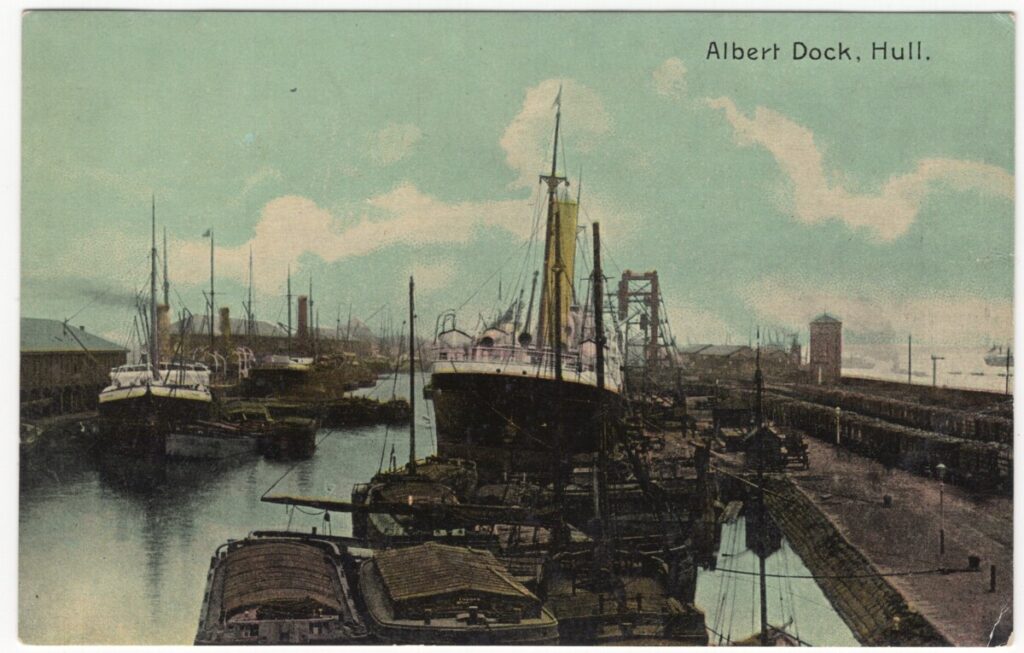
Albert Dock
Opened in July 1869 by Albert and Alexandra the Prince and Princess of Wales, the entrance to Albert Dock was close to the old town – a massive area grouped together in a chain of man-made waterways.
Ships and barges turned off the River into Humber Dock, Princes, then Queens the nearest to North Walls, where shipping, trawlers and barges floated from the River Humber through to the industrial centre of the City.
A long waterway, Albert Dock ran west of them parallel to the River Hull, following the line of Hessle Road and further north of it, Anlaby. It was a place for unloading wares like fish, textiles and commodities and the source of employment for locals living nearby.
It was an enormous feat of engineering to build and would have been a sight worthy of mention for any traveller into the city. The postcard was unwritten but kept in someone’s safe keeping to remind them of a busy day.
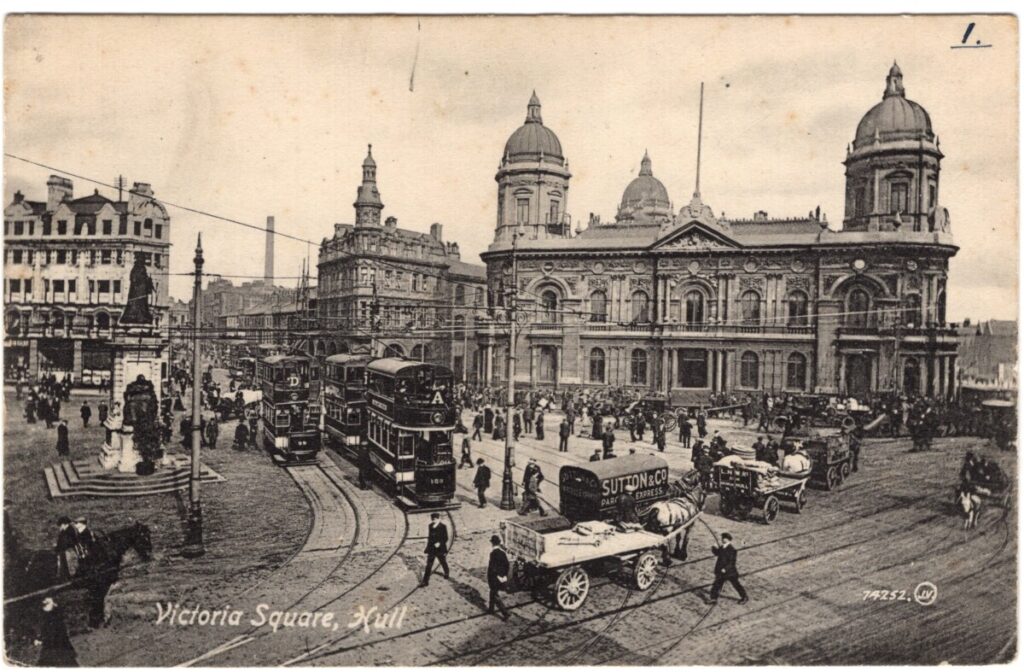
The first sight of Hull for many was City Square – Queen Victoria Square to give it its proper name
Bustling with trams, traps and horses this photo was taken from Monument Bridge. To the right was the statue of William Wilberforce and behind them lapping waters of Prince’s Dock where prows and barges, boats and sails lined up in a collection of craft taking wares to and from Yorkshire.
The Dock Offices looked out onto this scene, Costello’s corner on the far left, a local retailer. Taken in circa 1904 this picture shows the changing face of Hull, mechanised transport soon taking over from horses and carts although right through to the Forties bicycles were seen everywhere.
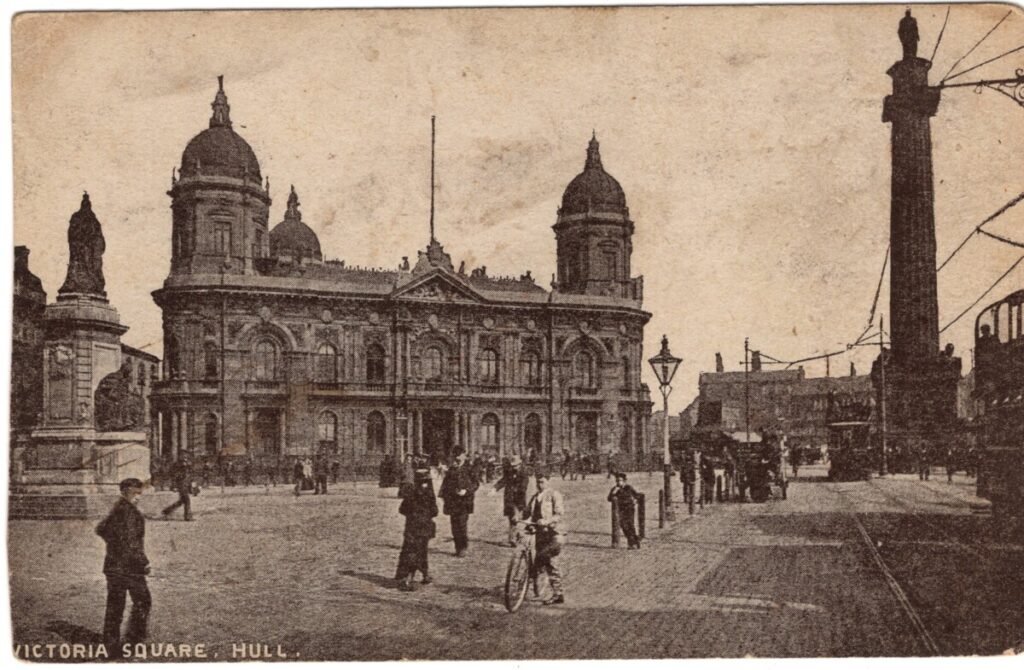
Dock Offices and Monument Bridge looking towards Whitefriargate and the Old Town
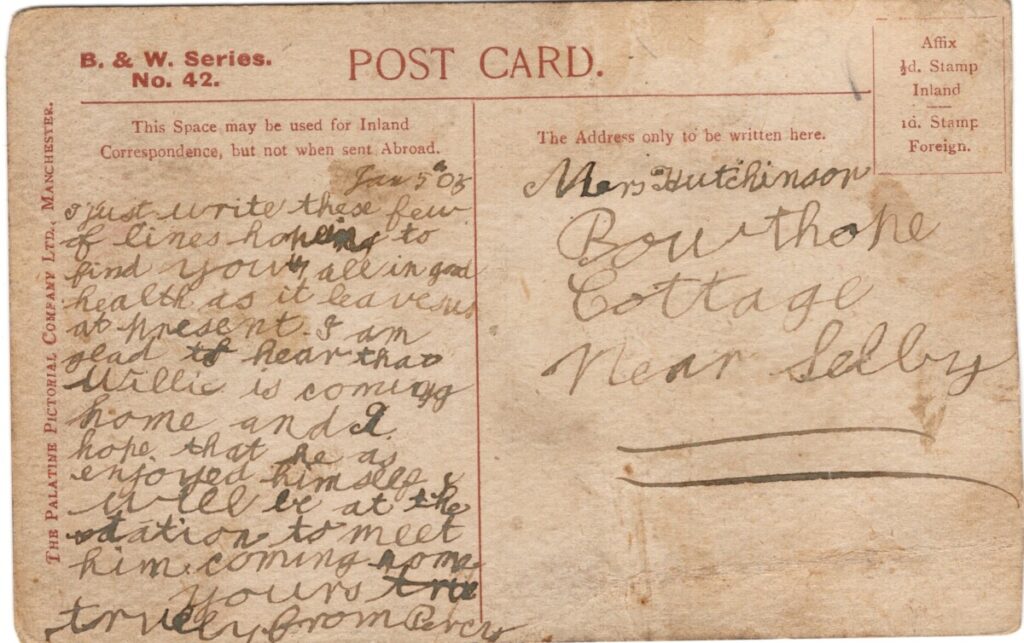
Mrs Hutchinson, Bourthorpe Cottage Near Selby. Jan 5 .03.
I just write these few of lines hoping to find yourself in good health as it leaves is at present. I am glad to hear that Willie is coming home and I hope that he as enjoyed himself. I will be at the station to meet him coming home. Yours truly from Percy.
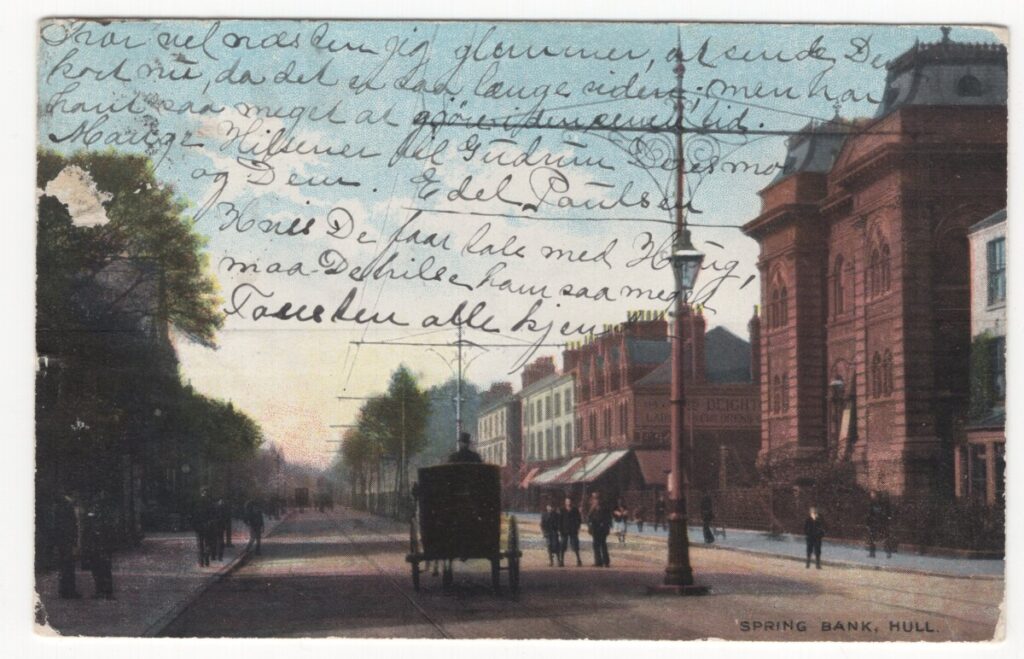
Spring Bank
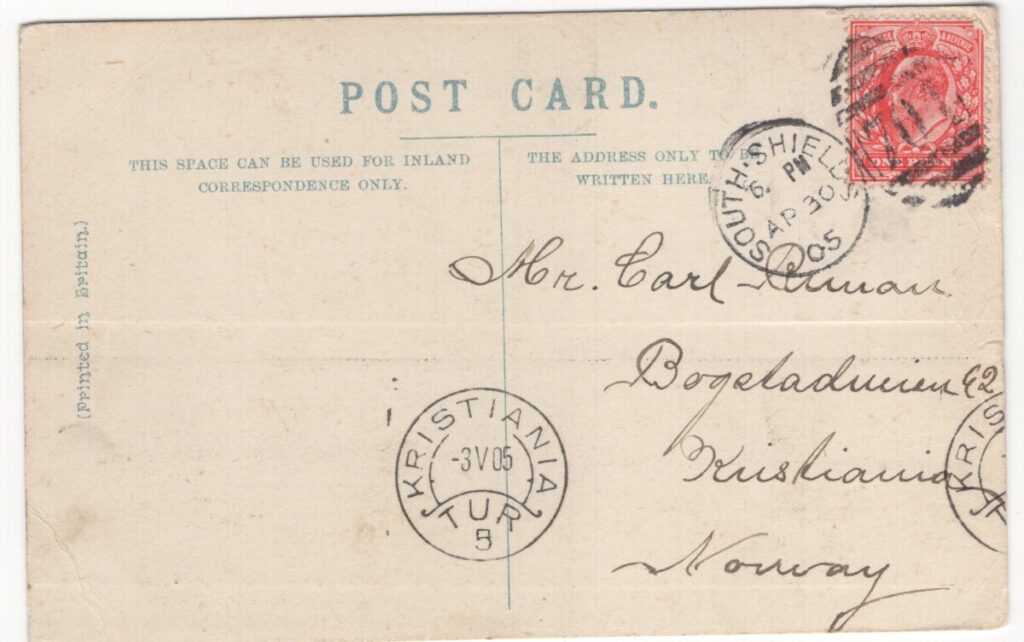
April 30th 1905. To Mr Carl Runan (?) Bogstadveien 42, Kristiania, Norway.
Shipping lines ran from Hull docks to all over Europe including its neighbour Norway, sailing northwards from the Humber many times a week. Shipping would have docked bringing fish from Iceland and merchants came with them disembarking in Hull before travelling elsewhere in the UK.
In 1905 Kristiania was the name of its capital city, renamed Oslo in 1925. The picture of Spring Bank was hurriedly written over then taken in the owner’s belongings northwards before being posted in South Shields, a coastal town near Newcastle and the River Tyne.
Do you speak Norwegian and can translate this postcard? We’d love to hear from you to add these words to our stories.
Contact us here
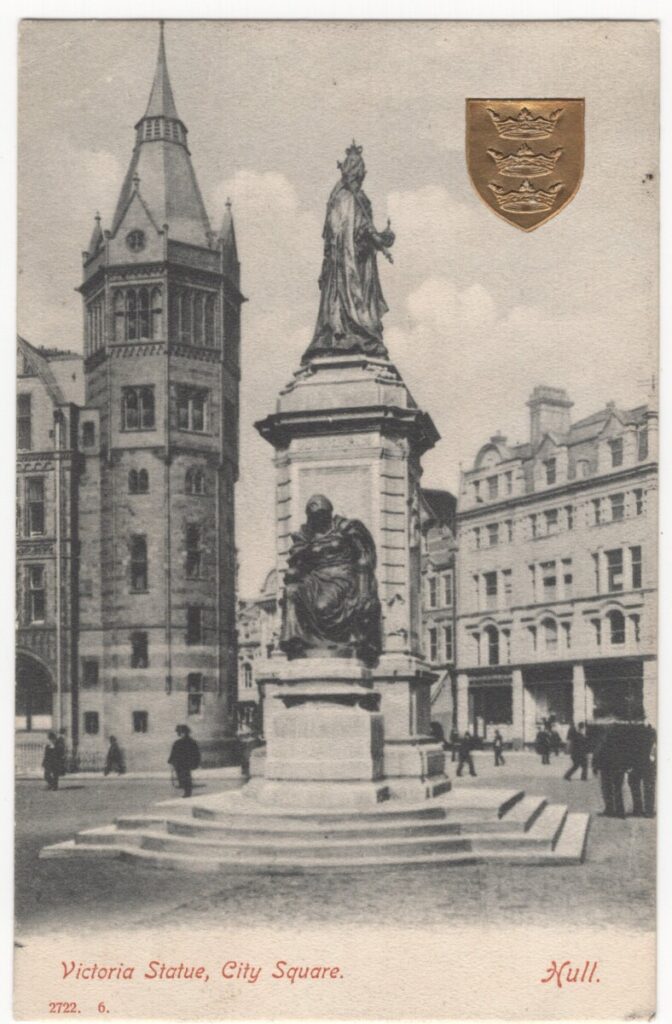
Victoria Statue and Prudential Tower stand tall in City Square
The death of Queen Victoria was memorialised with a statue in City Square, renaming it Queen Victoria Square. Overlooked by the Prudential Tower part of the Prudential Assurance Company offices, the two together and the gold stamp of the City make for an attractive scene.
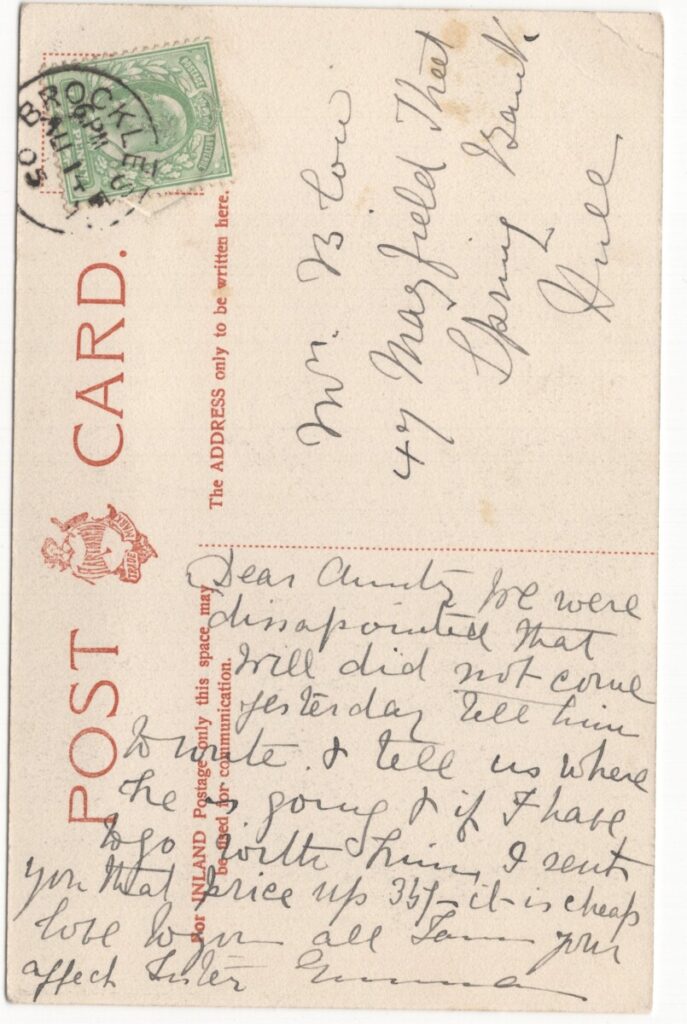
To Mr and Mrs Low. 49 Mayfield Street. Spring Bank. Hull. August 14th 1905.
Dear Aunty. We were disappointed that Will did not come yesterday tell him to write & tell us where he is going & if I have to go with him. I sent to you that piece up 35 / – it is cheap love to you all your affec sister …
Before the telephone was installed in people’s homes a postcard would often be the quickest way of sending a message.
Postmarked from what looks like Brocklesby, Lincolnshire the letter would have travelled north to the Humber Ferry before being sailed across the River to reach the part of Spring Bank nearest Botanic crossing where Mayfield Street still exists today.
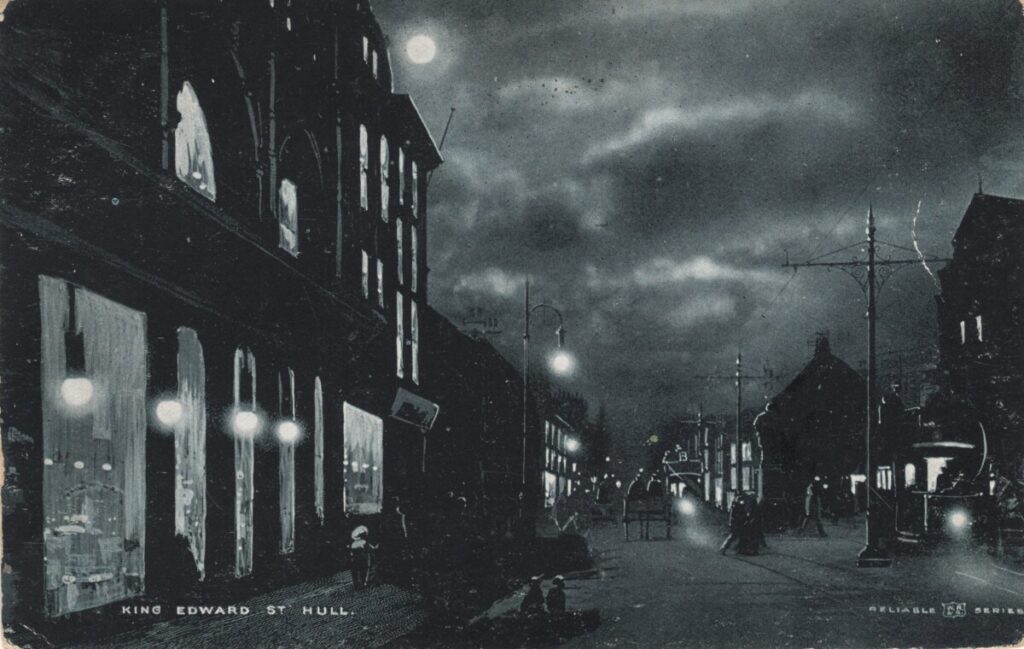
Night falls on King Edward Street illuminating shop windows as a horse and trap whip by
Part of the city centre, King Edward Street housed shops and offices as well as the famous Powolny’s restaurant where Dantasie entertained and Mira saw in 1936 on New Year’s Eve.
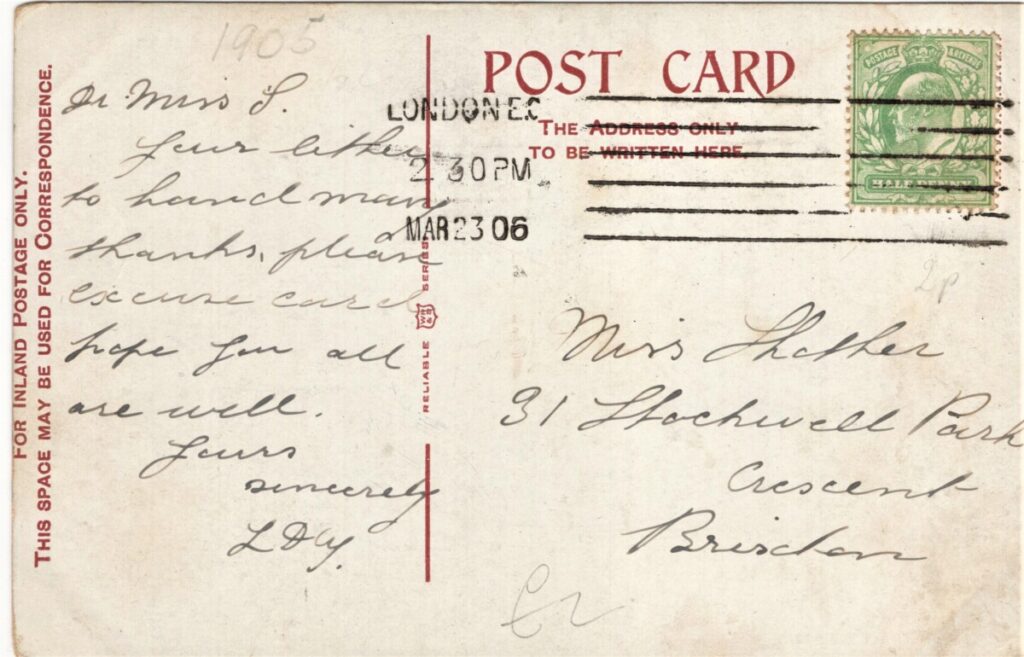
“23rd March 1906.
Miss Hother. 31 Stockwell Park Crescent Brixton.
Dr. Ms P. your ?letter to hand many thanks, please excuse card hope you all are well. Yours sincerely, L D y. “
Copperplate handwriting was a style taught to all schoolchildren, but writing was still individual making certain letters in this hurriedly scribbled card difficult to read.
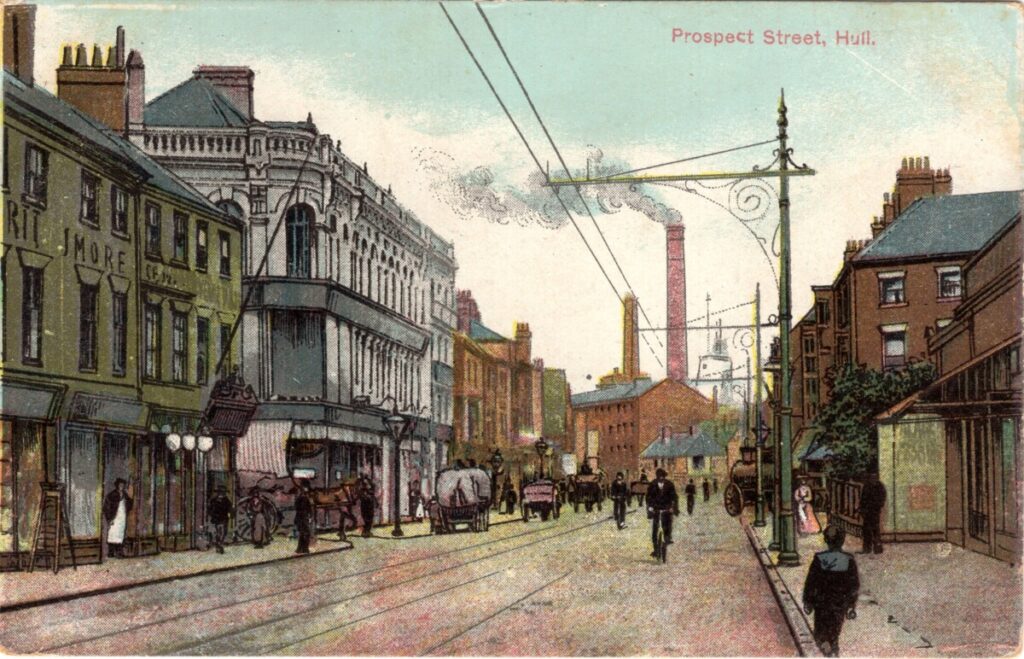
Prospect Street
Looking down Prospect street towards Blundell’s corner, Thornton Varley’s department store is the grey building on the left.
One of Hull’s main shopping streets, the artist is standing with King Edward Street behind him, the road that leads cyclists to and from Queen Victoria Square.
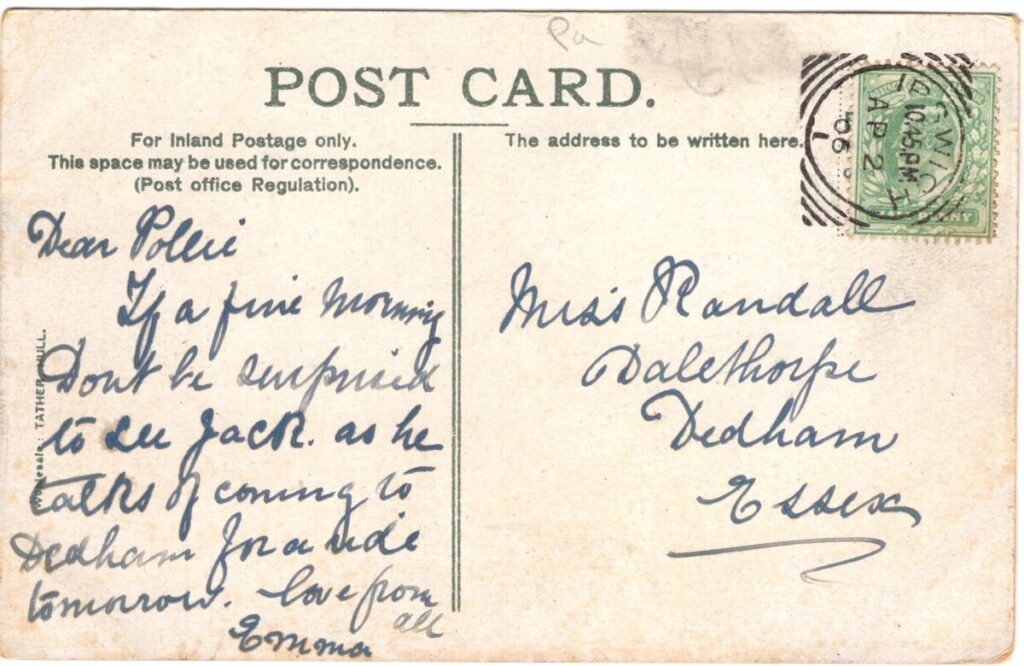
April 2nd 1906.
Miss Randall, Dalethorpe, Dedham, Essex.
Dear Pollie, If a fine morning don’t be surprised to see Jacke as he talks of coming to Dedham for a ride tomorrow. Love from all. Emma.
Sent from Ipswich to Essex, the card might have been bought on a journey to Hull and used as a keepsake, a scene familiar to her and the addressee.
Can you spot the traction engine in this picture? It’s one of three types of transport seen…
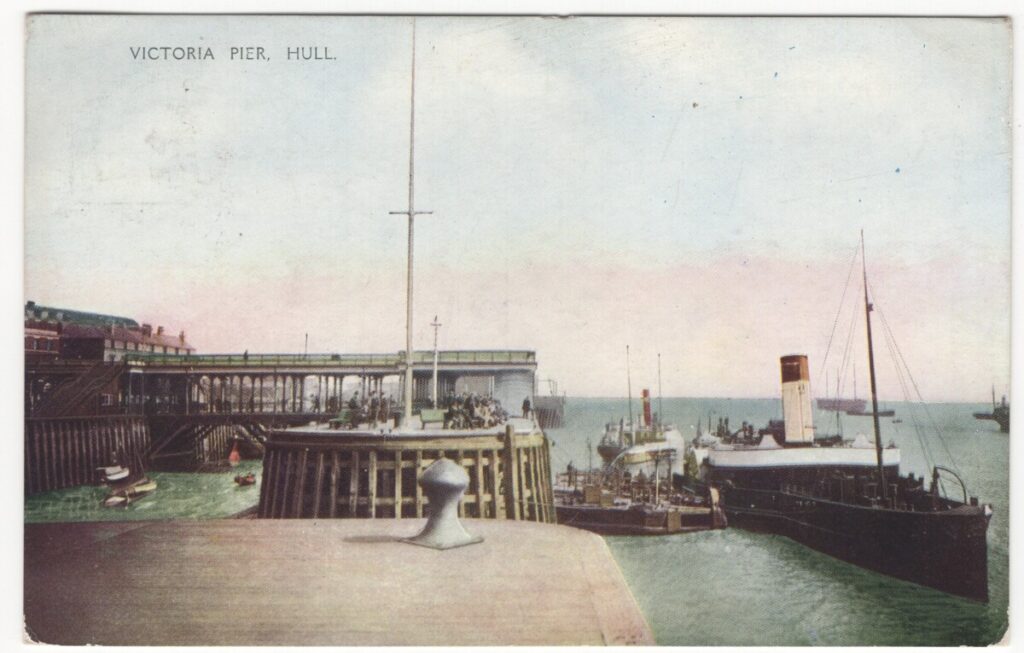
Victoria Pier on the River Humber
Travellers arrived and departed from Victoria Pier to sail on a steamboat across the Humber to Lincolnshire. It was full of sightseers watching Marcus Bibbero for his famous swim.
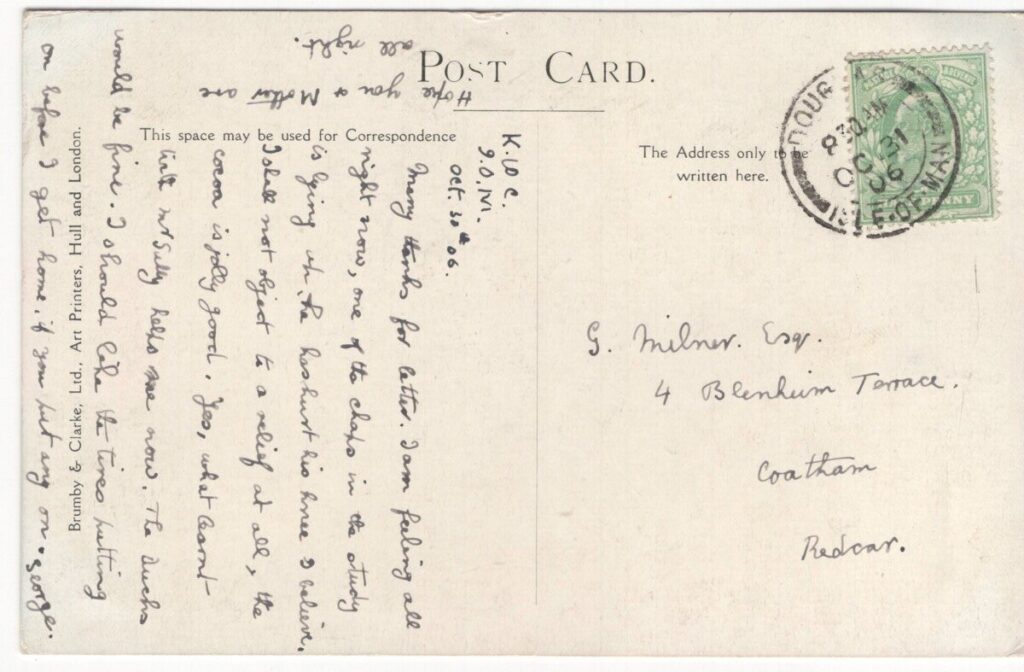
Sent to S. Milner Esq. 4 Blenheim Terrace, Coatham, Redcar.
“K.O.C. I O IVI. Oct 30th 06.
Many thanks for the letter, I am feeling allright now, one of the chaps in the study is lying .., he hasn’t hurt his knee, I believe. I shall not object to a relief at all. The cocoa is jolly good. Yes what’s learned with Mr Sully helps me now. The Duchs would be fine. I should like the tires putting on before I get home, if you put any on. George.”
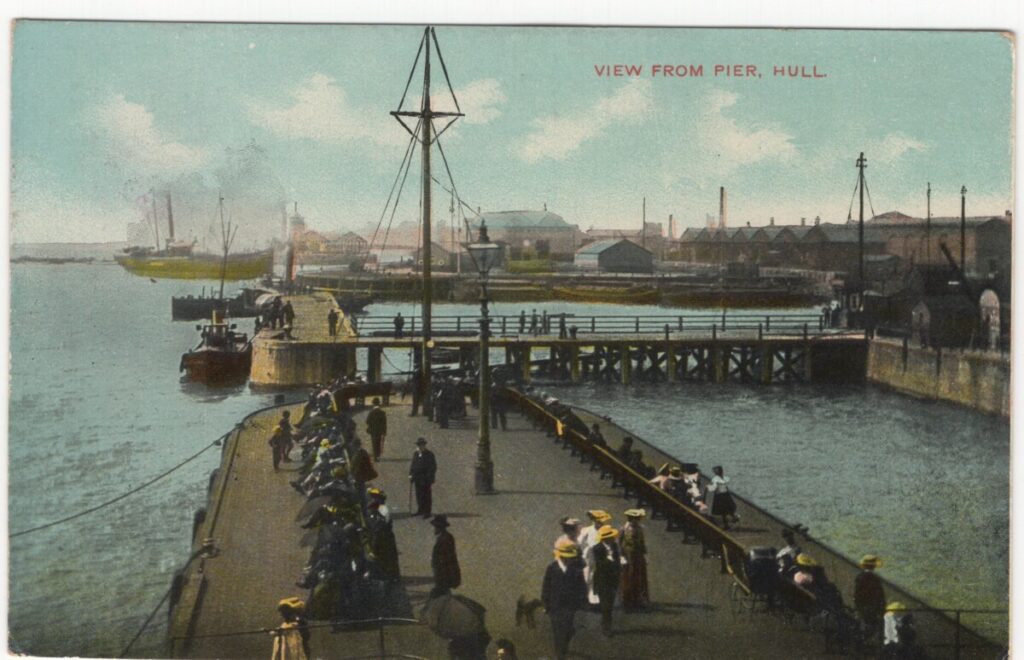
Dressed in the straw hats and long skirts of Edwardian Britain, people sit on the Pier looking out across the Humber as ships and barges sail by.
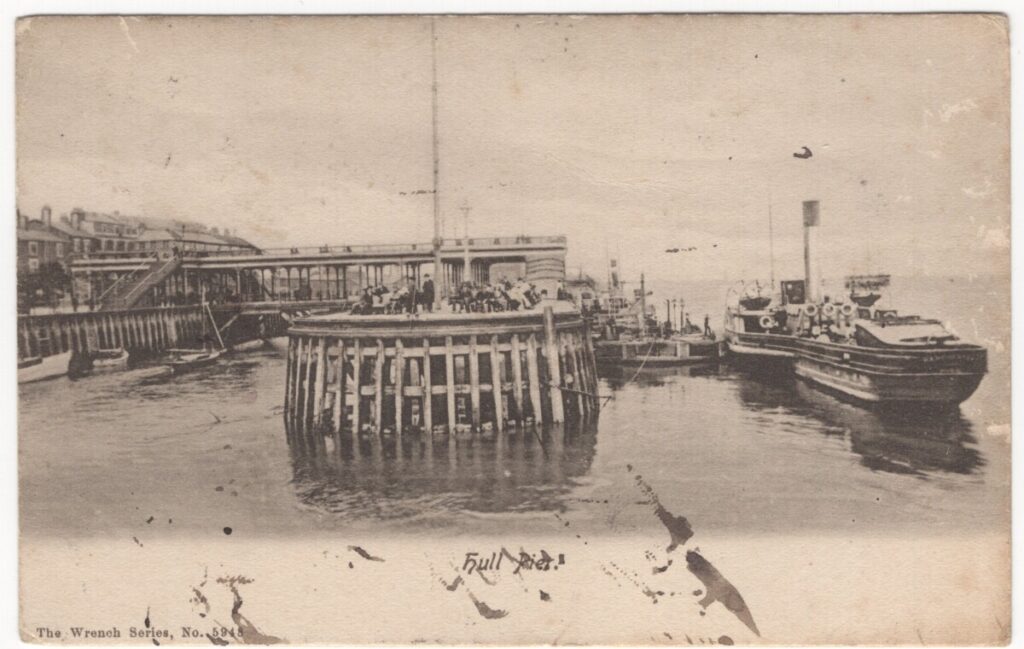
Hull Pier on the River Humber, otherwise known as Victoria Pier
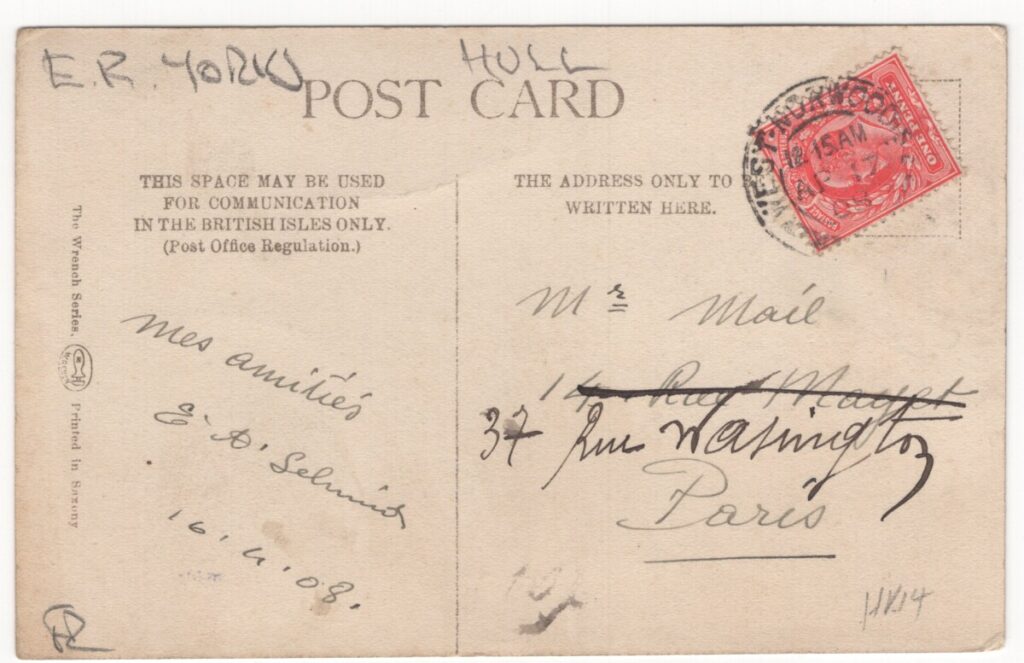
This postcard was sent to ‘My friends – ‘mes amities’ by E. A. Schmidt on 16th April 1908. A simple message, perhaps to tell Mr. Mail that they’d arrived safely, it was originally addressed to the wrong place in Rue Mayet before being redirected to a different street in the city.
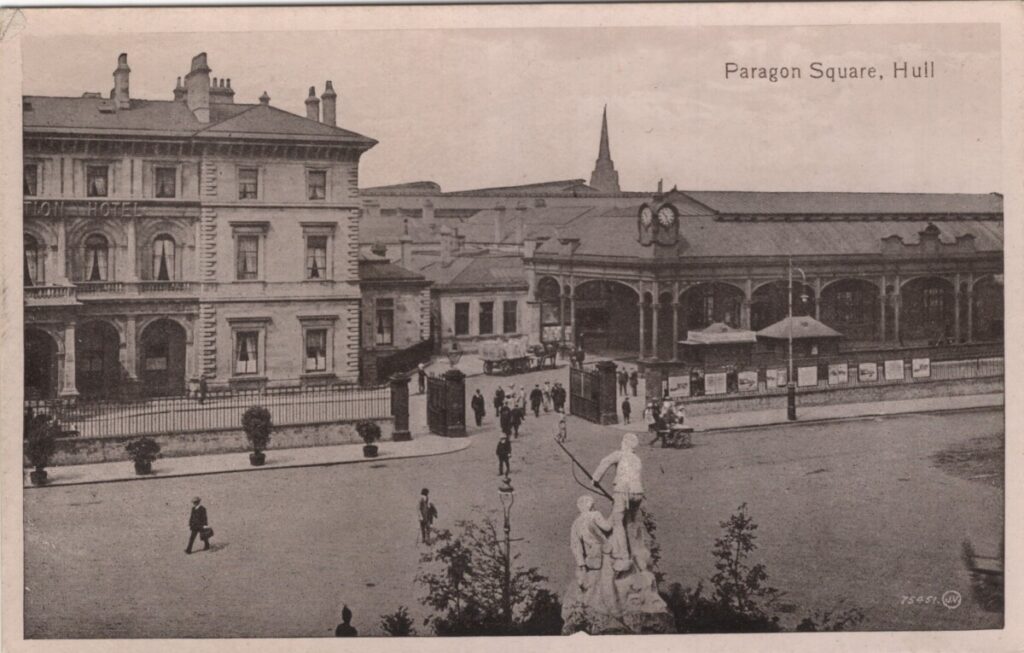
Paragon Square, Stations and the Boer War Monument
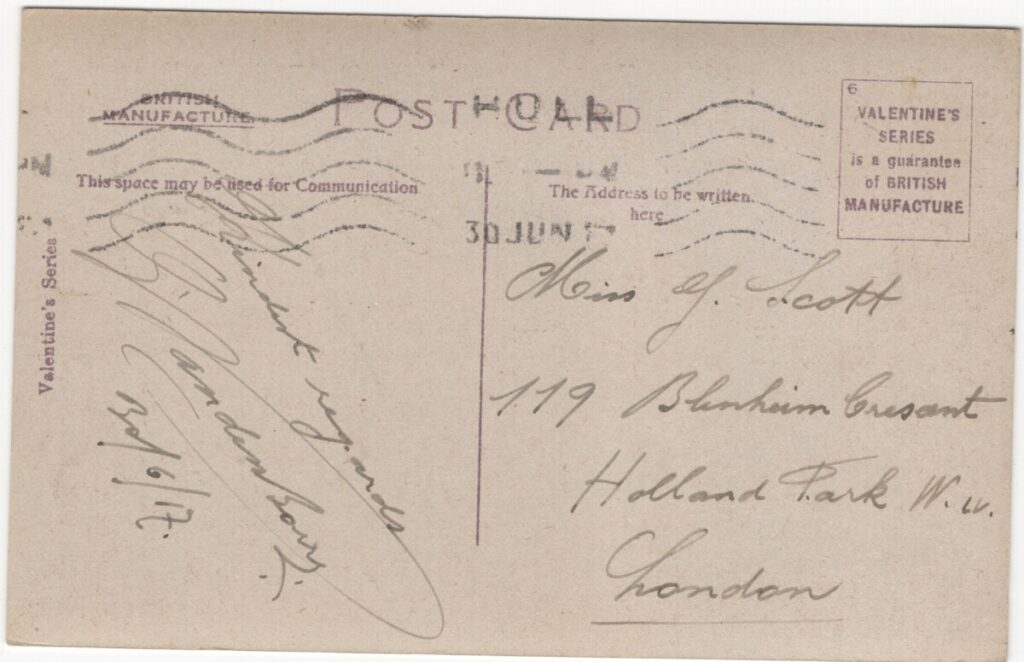
World War 1 – the Great War – had broken out two years earlier when S. Bandenborry sent a short postcard across the country. With the war memorial in the foreground looking out towards Paragon Station its message is clear.
A Miss J. Scott living at 119 Blenheim Crescent, Holland Park, W1V in central London, received it. Her friend could have written a note to say they’d arrived safely, or thoughts were with them, a love letter of a kind.
Even though their hearts would have been full of words, they were unable to express them.
All post was censored during the War and their signature was the safest letter to send.
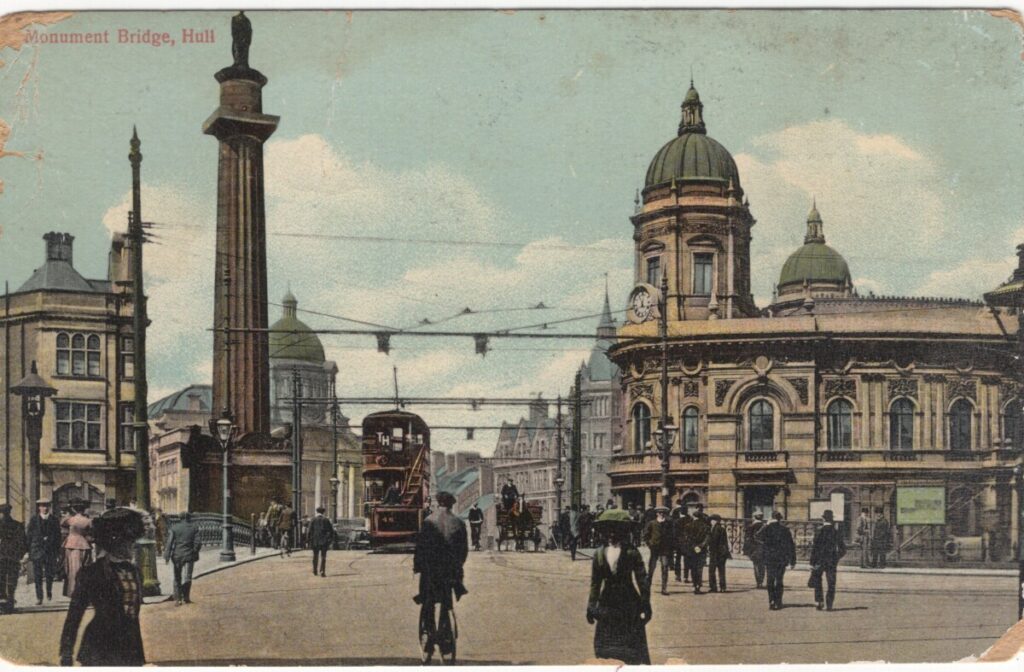
Monument Bridge and Dock Offices, City Hall in the background and the Prudential Tower
People walk over Monument Bridge, towards the Dock Offices on the right and City Hall ahead in Edwardian Hull, a bustling urban scene.
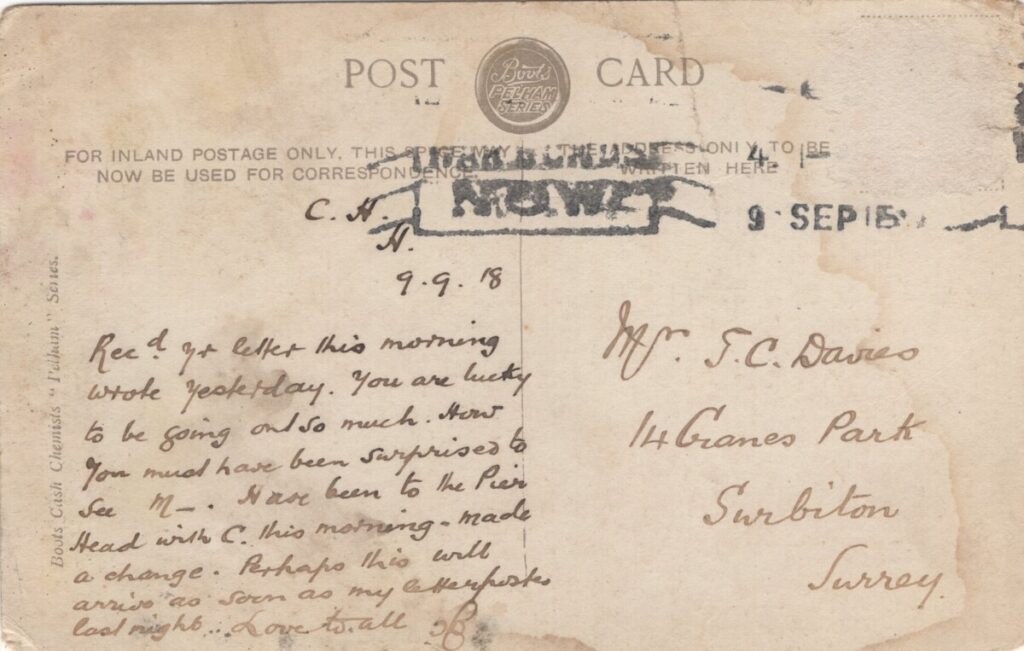
The Great War was trailing to its end when this postcard was written to Mr. S.C Davies at 14, Cranes Park, Surbiton, Surrey on the 9th September 1918 and the needs of censorship was less pressing. Rationing was still in place, however and the results of Zeppelin bombing in Hull had already been brought to bear.
“Rec’d your letter this morning wrote yesterday. You are lucky to be going out so much. How you must have been surprised to see M. – Have been to the Pier Head with C. this morning. Made a change. Perhaps this will arrive as soon as my letter posted last night. Love to all. ” The sender’s signature is written in two letters, a distinctive flourish at the end.
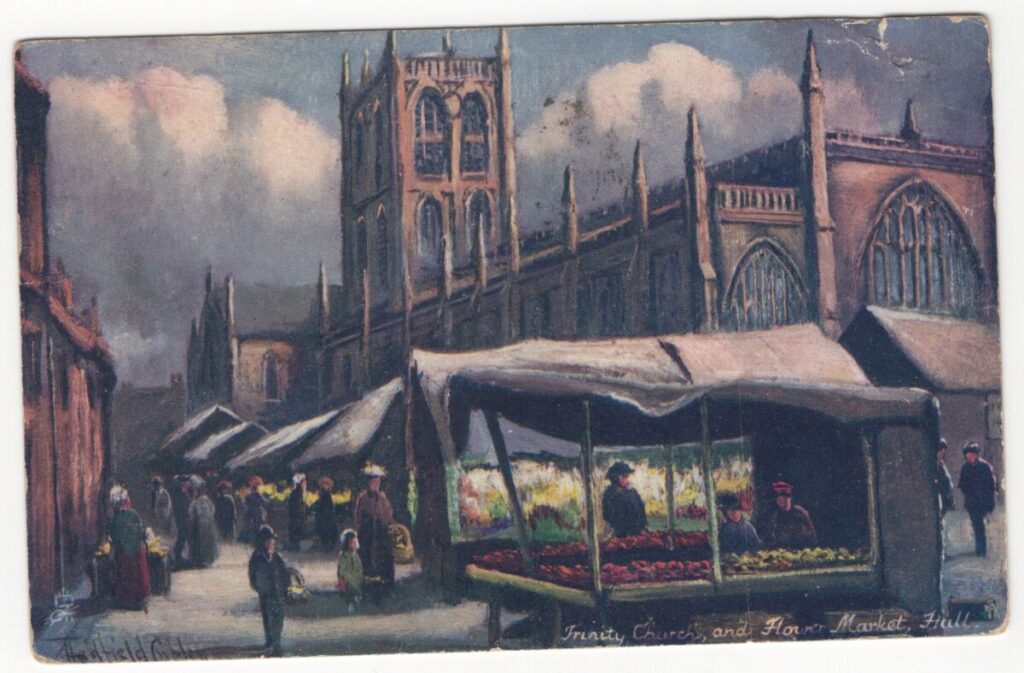
Flower Market, Trinity Square
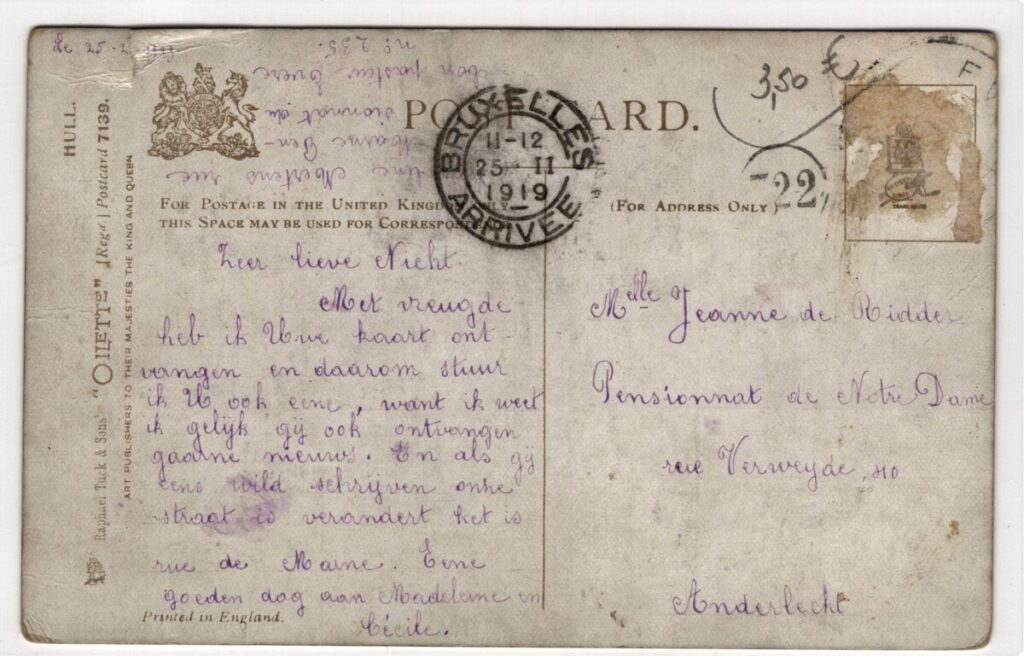
Close to Prince’s Dock and Victoria Pier where the ferry sailed to Lincolnshire, the old town by Trinity Church was a busy area full of the shouts and cries of stallholders ringing out their wares. Imported from all over Europe and grouped together in bright splashes of colour, they sold flowers to Hull and from there taken out to the rest of Yorkshire.
Written in Flemish and sent to the port of Anderlecht in Brussels on the 25th November 1919, Cecile chose a scene familiar to most travellers and Hullensians; a brightly coloured scene.
“Very dear niece / cousin. I was delighted to receive your card, which is why I am now sending one to you as I know you also like to get news. If you ever want to write our street has now changed it is now rue de Maine. Good day to Madeleine and Cecile..”
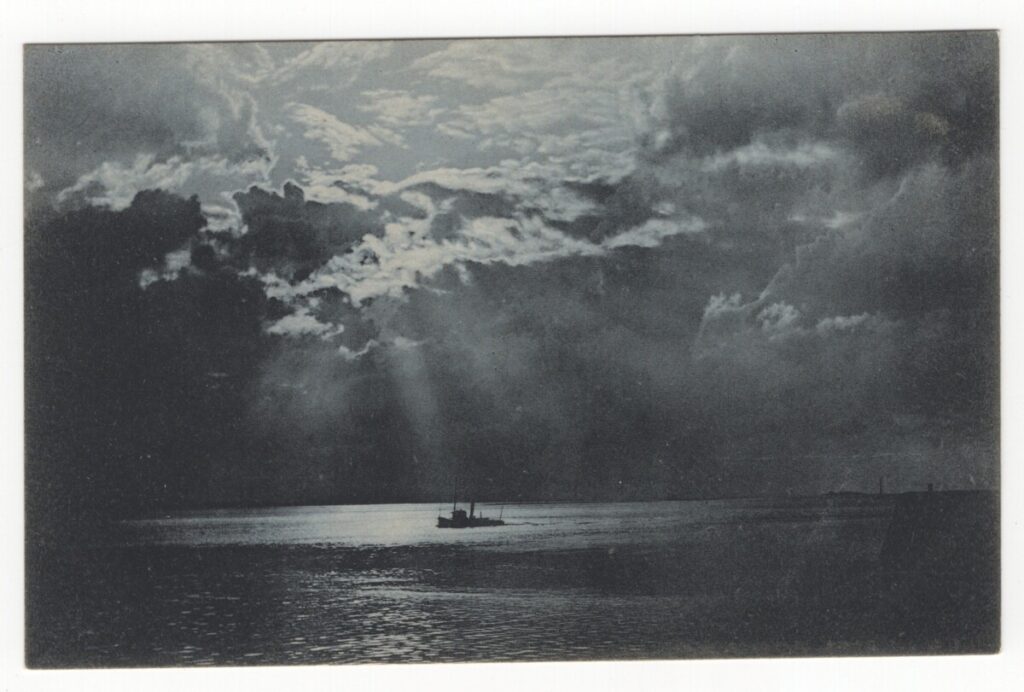
The Humber
Bought but not written or sent
A trawler sails along the wide expanse of the River Humber alone except for the moon breaking through the clouds lighting its way.
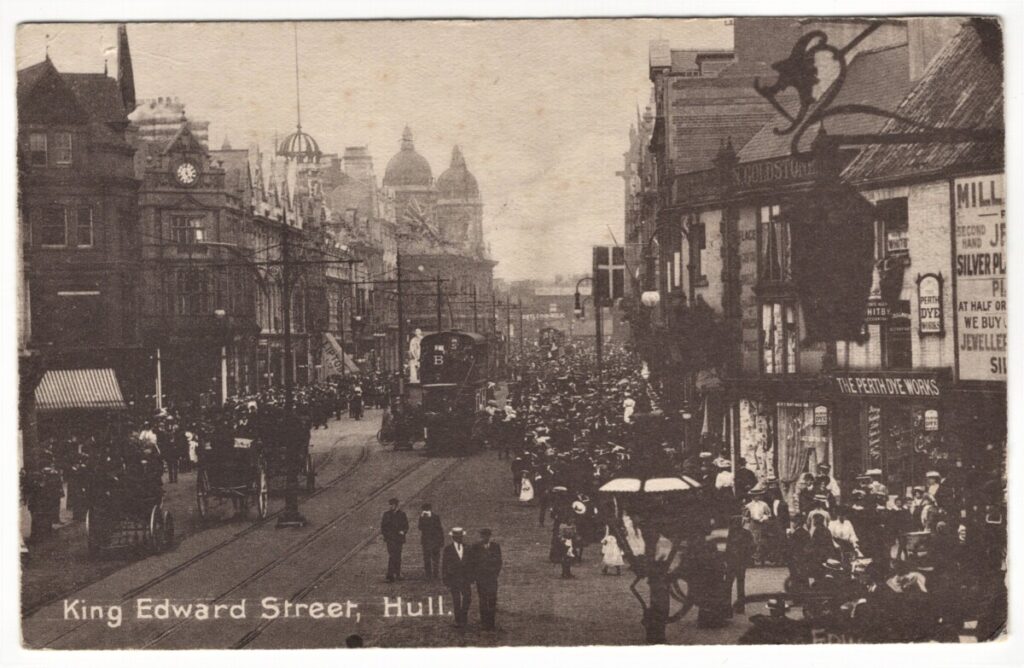
King Edward Street looking towards City Square
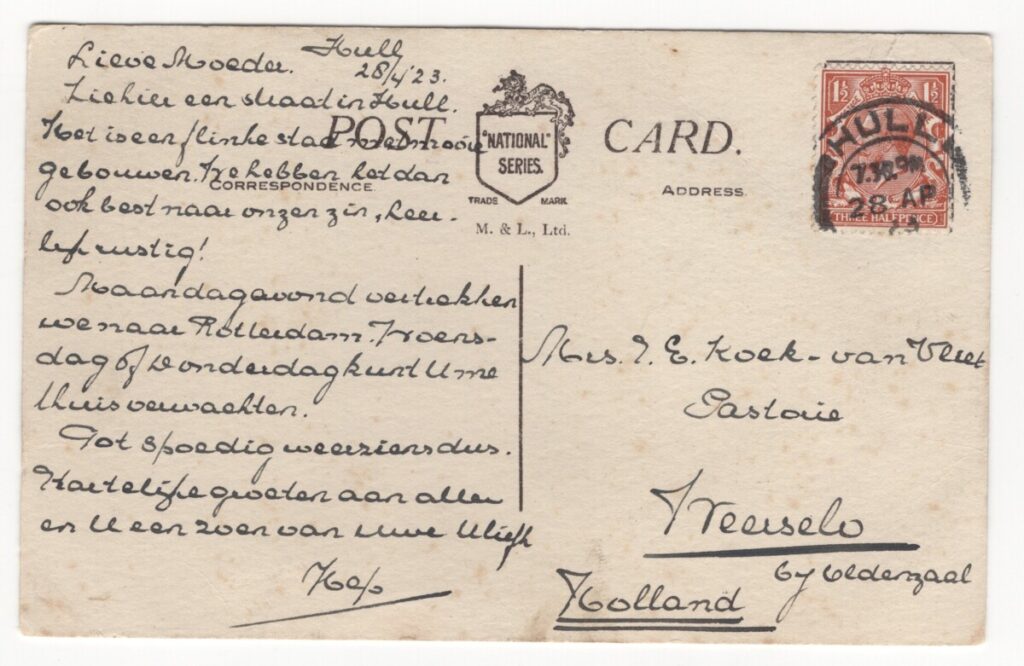
Sent on 28th April 1923 and written in Dutch, this sender saw the crowds along King Edward Street rushing towards the twin domes of the Dock Offices, ‘Rotterdam’ evocative of shipping sailing from Hull to the largest port in Europe.
“Dear Mother. This is a street in Hull. It’s a very big town with lovely buildings. We are enjoying our time here – wonderfully relaxed. On Monday evening we are leaving for Rotterdam. You can expect me to be home on Wednesday or Thursday. So see you very soon. Dear wishes to everyone and to you a kiss from your ….” the last word is indistinct but could be ‘loving’
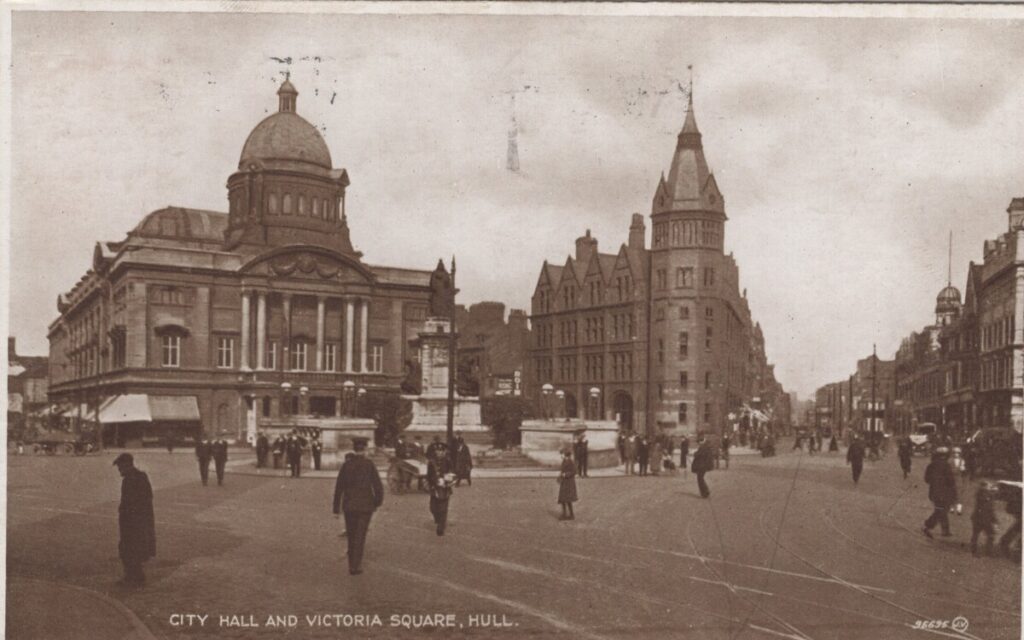
City Square towards King Edward on the right, Paragon Street in the centre, Carr Lane on the left.
Near building work for the new Ferens Gallery, this card shows the Prudential Tower, City Hall and a busy Queen Victoria Square.
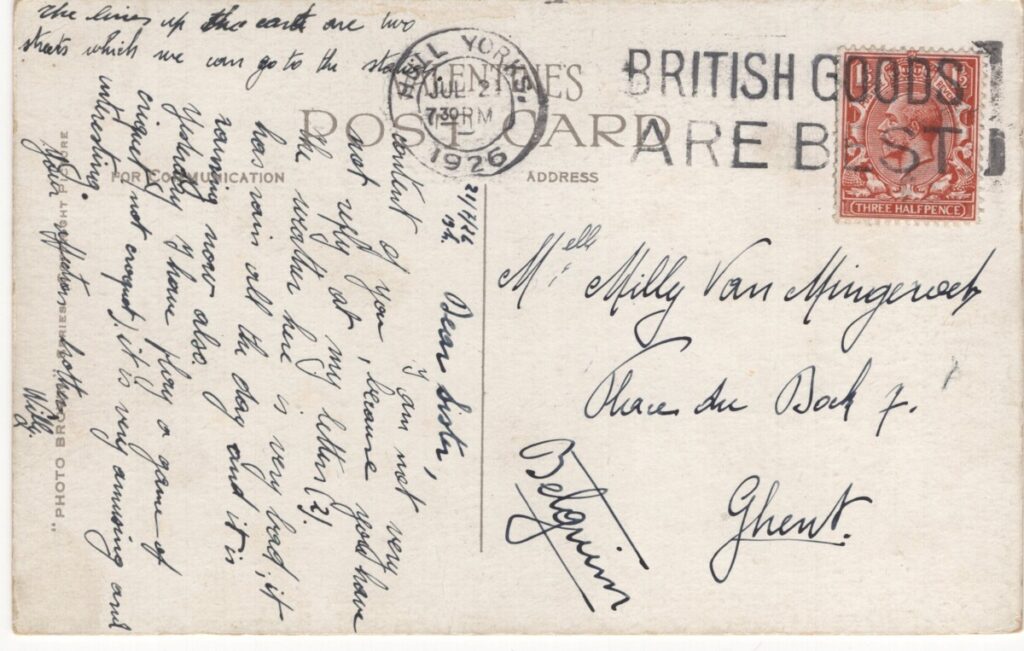
Learning English was a challenge for many who found writing in their second language couldn’t communicate entirely what they wanted to say.
July 21st 1926. To M’mlle Milly Van Minguet. Place du ? 7, Ghent. Belgium.
Dear Sister,
I am not very content of you, because you have not reply at my letters (2). The weather here is very bad it has rain all the day and it is raining now also. Yesterday I have play a game of Criquet not Croquet, it is very amusing and interesting.
Your affect. brother Willy.
Willy turned the card around so he could add an extra note, partly covered by the postmark at 7:30 p.m.
“The lines up the card one two that’s which we can go to the …..” the last word is lost to the stamp of the postmaster receiving the card in the post office in Ghent.
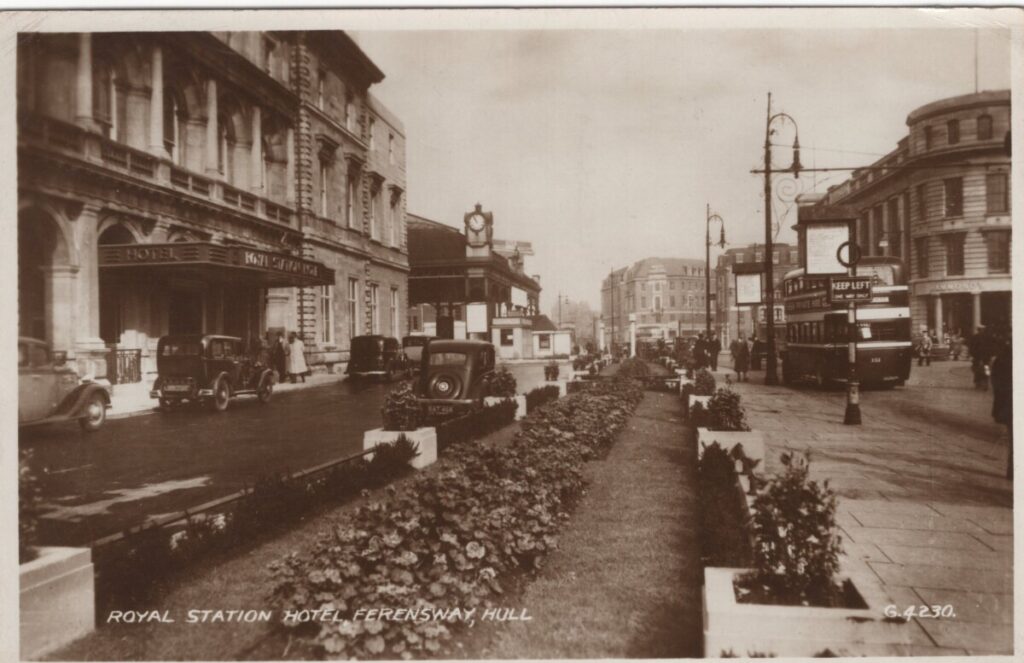
The Royal Station Hotel and Ferensway
Taken on what could have been the 4th February 1930 this postcard was taken outside The Royal Station Hotel. Passed by a tram, the curved frontage of Hammonds department store on the right, is opposite the bus station who’s clock says it’s five to eleven in the morning.
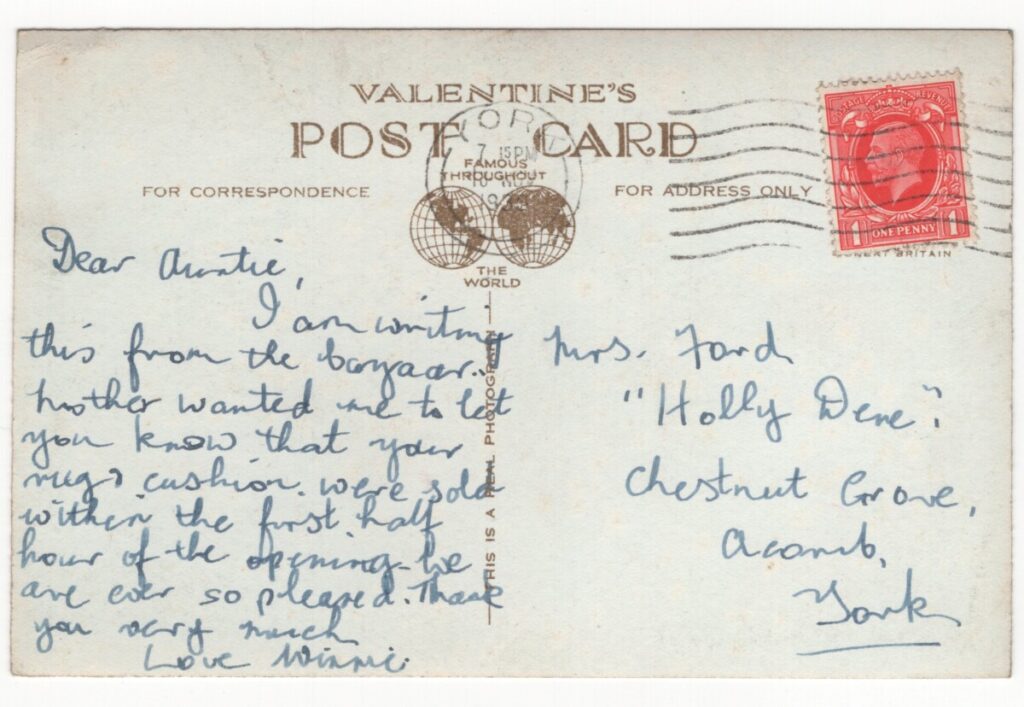
postmarked York 7.15 pm 10th November 1933*
To Mrs. Ford
“Holly Dene” Chestnut Grove, Acomb, York
Dear auntie,
I am writing this from the bazaar mother wanted me to let you know that your rug, cushion were sold within the first half hour of the opening. we are ever so pleased. Thank you very much.
Love Winnie.
*the second number is indistinct but appears to be a ‘3.’
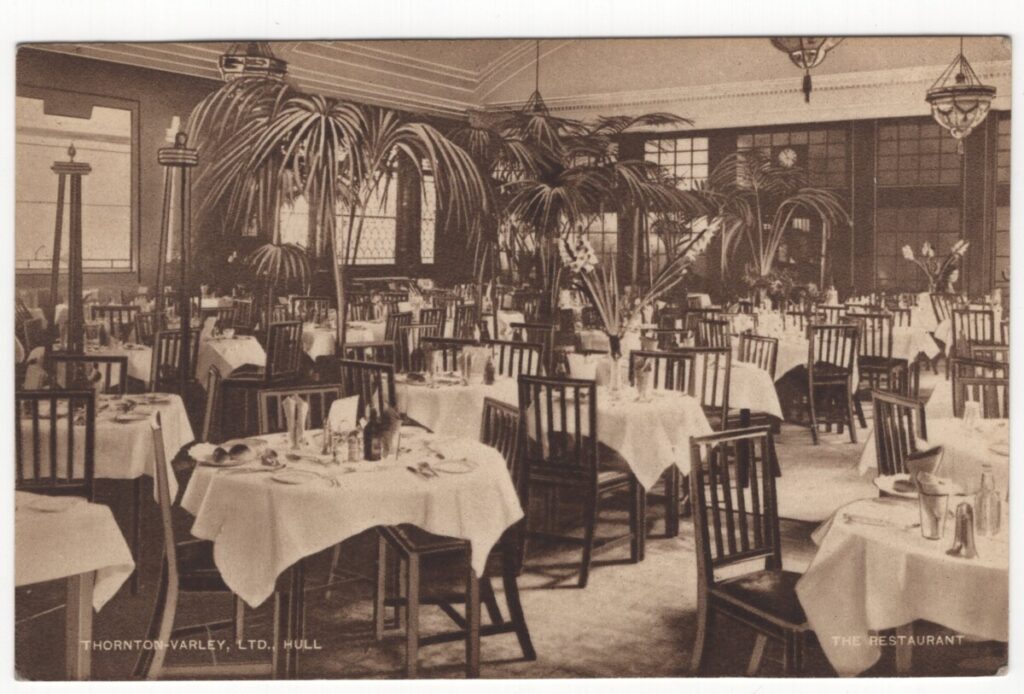
Thornton Varley’s Restaurant
For travellers it was not all about the docks and dock offices, there were plenty of places to rest and dine. Thornton Varley’s department store on Prospect Street had a large restaurant with entertainment and fashion shows put on for visitors to enjoy.
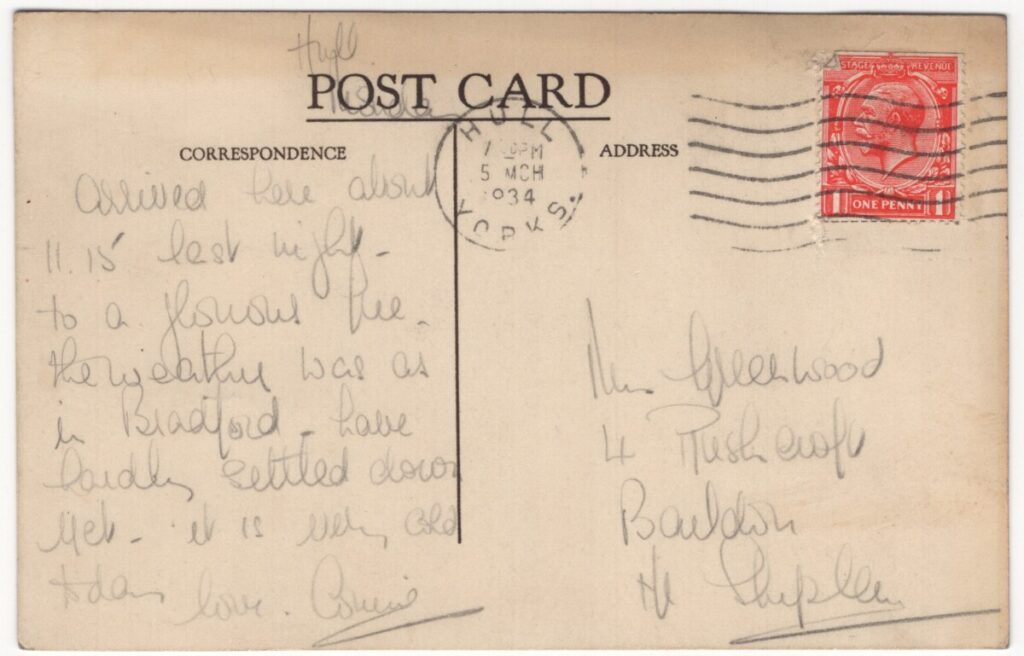
Sent on 5th March 1934 Corine sends a message to Baildon near Shipley in Yorkshire.
“Mr Greenwood. 4 Rushcroft. Baildon. N Shipley.
Arrived here about 11:15 last night to a glorious Hull (?). The weather was is in Bradford. have hardly settled down yet – it is very cold today, love. “
The last postcard in our collection is an optimistic note saying how much her trip to Hull is enjoyed.
Want to see some of the places mentioned from the comfort of your home screens?
Watch our romp through Hull’s history and fashion history in ‘The Locations ‘on the House of Mirelle’s YouTube channel for free