
No more so than in the 20s did fashion do a 360 degree turn on what was worn previously. The Great War finished in 1918 and like a seismic shock that hadn’t quite dissipated, in 1920 skirt lengths, the long silhouette and attitudes towards dress were frozen in time.
At the beginning of the decade you could still see the influence of Edwardian England and although hair had begun to be worn short and ankles shown, it took until 1922 for everything to change.
Fashion needed something to shake it up and shake it up it did. The great melting pot of Paris produced a new generation of designers when art met the freedom of movement that came with Jazz music and La Garconne – the Flapper – was born.
Frenetic and free, Jazz could not be danced with long skirts and gowns of the century’s first decade and skirts began to rise along with its liberating freedoms. Nightclubs throbbed excitedly and in their darkened corridors people were dangerous, flirtatious and sexy as the Roaring Twenties swept the Western world.
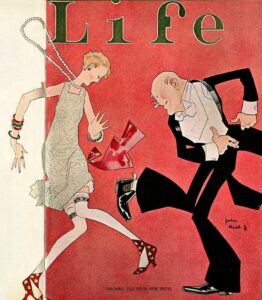
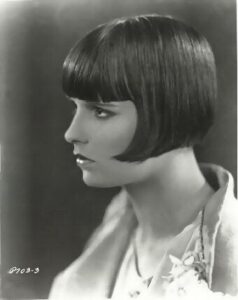
Fashion did as it had done always – responded. By 1923 waistlines dropped, busts almost disappearing under chemise dresses cut like slender slips on sporty frames. Sometimes embellished with beads and jewels the era of the Great Gatsby and the ‘Louise Brooks Bob’ brought an iconic look into the public imagination and everyone loved the youthful exuberance it meant.
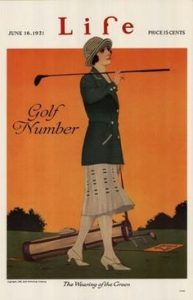
Women wore clothes that were freeing of their bodies rather than covering them up, all previous modesty abandoned. Sportswear and being sporty was egalitarian, women skied, swam and played golf. It was a time for relaxed dress codes and flexible fashion. Knitted separates that matched were worn everywhere, important as women had the vote, were sporty and had a healthy silhouette to show for it.
Ah, Hollywood; they romanticised the style of the decade. With high eyebrows and smoky eyes, the rosebud mouths of leading actresses gave the impression of a debauched elegance that most women didn’t share, make up was still minimal and well-chosen even for night.
Lashes were lengthened and cosmetic companies like Elizabeth Arden became more and more prominent opening concessions in department stores like Hammonds opposite Paragon Station in Hull.
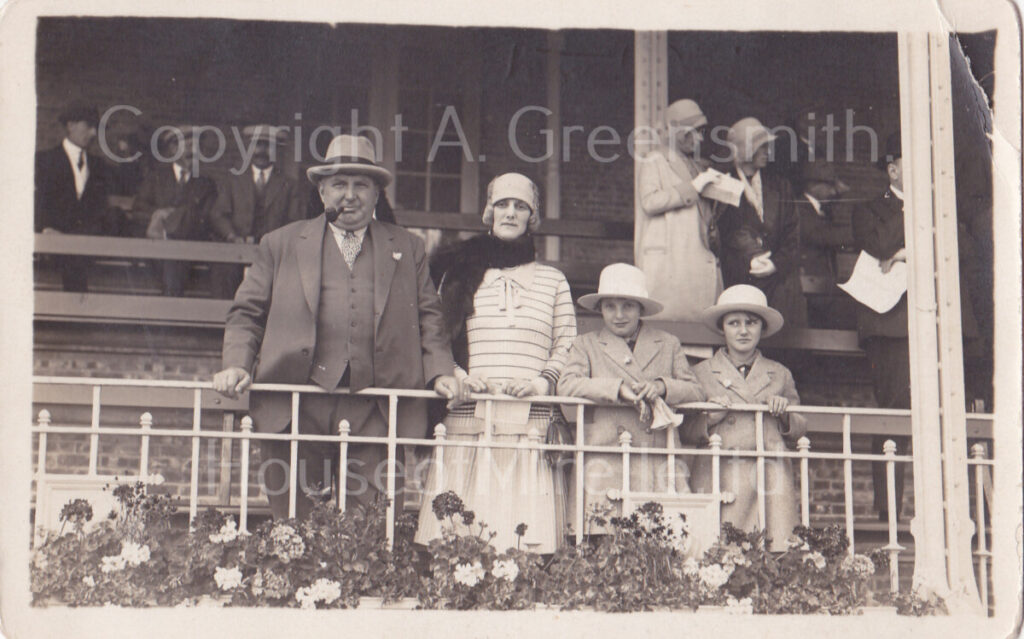
By the mid-Twenties the ideal silhouette was androgynous – without any curves or bustline. Miles away from the Gibson Girl and the luscious hair of the turn of the century, clothes inspired by sportswear became fashionable, as did cropped hair and a suntan.
When Elizabeth Bowes-Lyon the Duchess of York and George, the future King of England visited Hull in 1928, she wore the most up to date couture and her skirt finished at knee-length but the ladies in the audience who waved and cheered had covered theirs up, a more demure interpretation of the mid-decade trend.
For the affluent and daring, this was their time. Legs and arms, backs and décolletage were shown through slimly-cut panels of fabric, daytime dresses in cottons or Rayon, the new synthetic textile made popular by Courtaulds fabrics, a British firm. Watch more about the history of textiles on the House of Mirelle YouTube channel.
Embellished and embroidered in the evening silks, velvets, satins and transparent gauzes were layered from under which the woman’s form could be seen, Egyptian metallics and jewel-colours mixing with Art Deco lines. Often embellished with the dots and dashes of bugle beads and hung with fringing they were artforms in and of themselves, precious and valuable even if worn on only one occasion before being put away again.
Furs were added to everything, trims and collars fringing asymmetric lapels buttoned across women’s bodies or added to heavily embroidered stoles. For those whom no expense was spared, opulence lasted until the Wall Street Crash of October 1929.
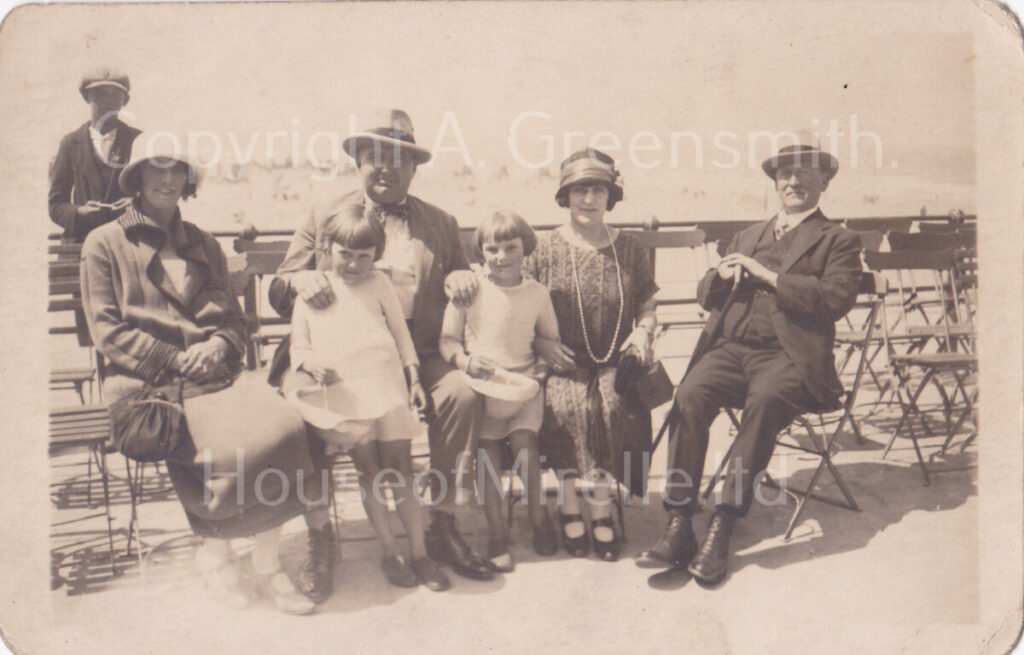
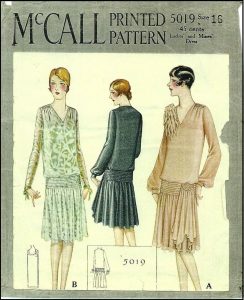
Despite what the Couture said or suggested, an average woman adopted fashion more conservatively; dropped waists emphasised by seams or belts, skirts on the mid-calf or ‘midi’ line. It was only in 1927 that skirt lengths reached their shortest at or on the knee, but legs were as important as arms in the Twenties and they were shown off encased in stockings, always.
To the modern-day reader it is, perhaps, the cloche hat that sums up the Twenties. Named after the bell shapes they were inspired by, a cloche clasped women’s hair flat against their heads, framing the big eyes and cropped bobs that most ladies wore regardless of status. As an accessory it was probably the most famous of the 20th century, no other item except the mini-skirt defines the years it was worn in an instant.
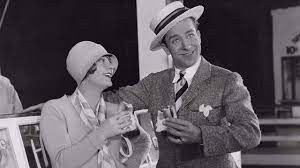
When waists returned to their natural place, 1930 beckoned. Short hair and cloche hats remained for a while but as fashion worked out its direction, hemlines dropped to the long length of the early Twenties, the end forming a perfect symmetry to the start of the decade.
Want to know more about Mira’s other career? Watch the House of Mirelle for free on YouTube
Test Your Knowledge
Woo Hoo! You’ve passed. Some answers are wrong. Read the article and try again.Results


#1. What was the skirt length in 1921
#2. What city most influenced the Jazz Age
#3. What book sums up the excesses of the Roaring Twenties
#4. What haircut was Louise Brooks known for
#5. What was the chemise dress
#6. Where was Hammonds department store
#7. What was the ideal silhouette
#8. What year were skirts the shortest
#9. What hat shape was the most famous
#10. What year did waists return to their natural place